

Laser Removal vs Saline: Which Is Right for You?
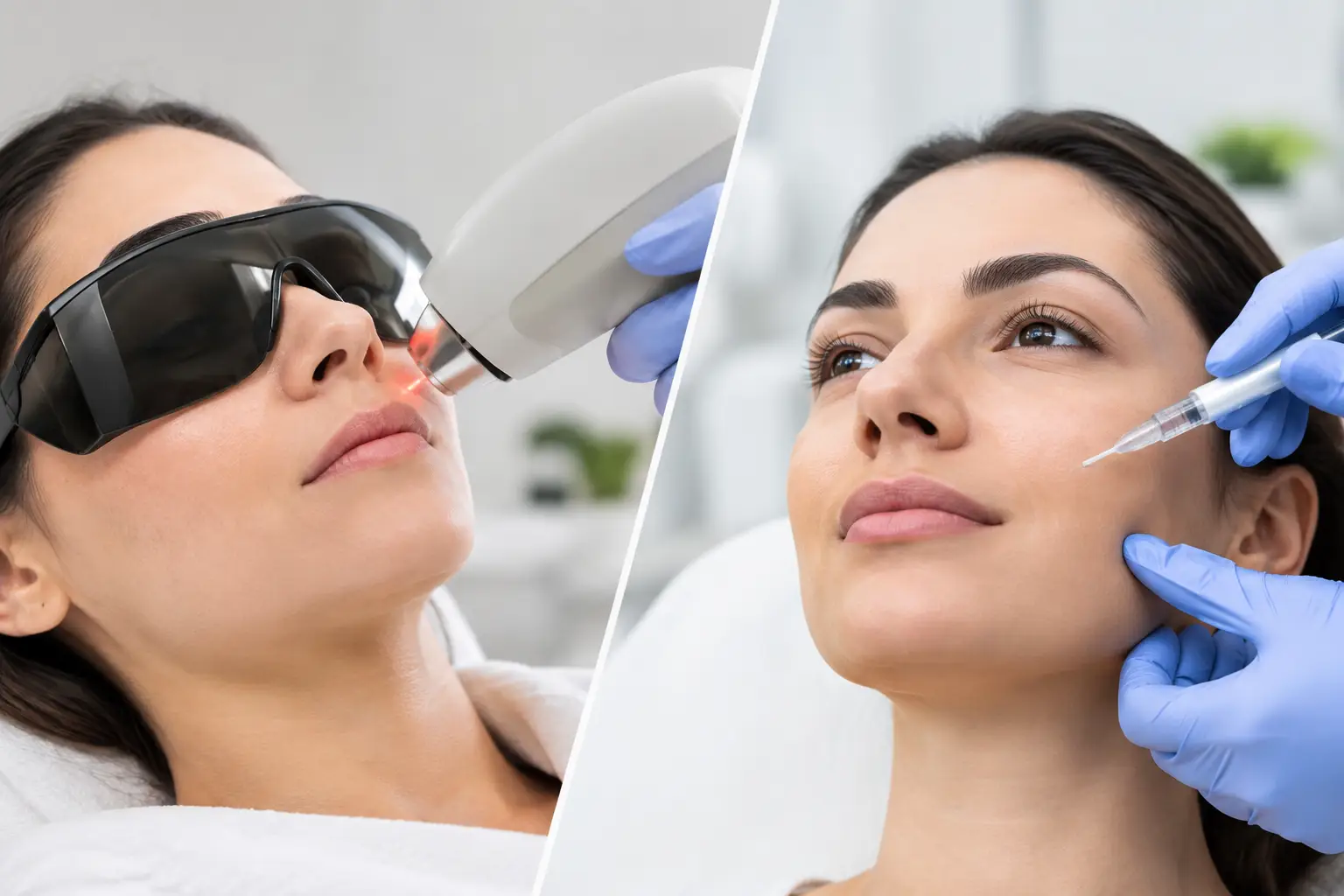
A poorly healed brow treatment, a tattoo that no longer reflects who you are, or pigment sitting in the wrong tone can feel far more visible than it appears to anyone else. When comparing laser removal vs saline, the right choice is not simply about what is quickest or cheapest. It depends on the pigment, its depth, the area treated, your skin characteristics, your healing history and, crucially, whether the work is a body tattoo or cosmetic tattooing.
Both methods can play a valuable role in corrective work. They work in very different ways, however, and an expert consultation should never treat them as interchangeable.
Laser removal vs saline: the fundamental difference
Laser removal uses controlled pulses of light energy to target pigment beneath the skin. The energy breaks pigment particles into smaller fragments, allowing the body’s immune system to gradually clear them. Different wavelengths are selected to target different colours, which is why professional laser assessment matters particularly with multicoloured tattoos and cosmetic pigments.
Saline removal is a form of pigment lifting. A sterile saline-based solution is implanted into the skin using a tattooing or PMU technique. Through osmosis and the body’s natural healing response, pigment is encouraged towards the surface and can be released within the healing crust. It is most often considered for semi-permanent make-up, including unwanted eyebrow, lip or eyeliner pigment, and can be particularly useful in urgent corrective situations.
Neither procedure literally erases pigment in one appointment. Both require carefully spaced sessions, conscientious aftercare and realistic expectations. The aim may be full removal, substantial lightening, or creating a safer, cleaner canvas for correction.
When laser is often the stronger option
Laser is commonly the first consideration for established body tattoos, especially black or dark blue ink. These colours tend to absorb laser energy effectively, although results still vary according to ink formulation, tattoo density, placement and how deeply the pigment has been implanted.
For unwanted cosmetic tattooing, laser can also be highly effective, but this is where specialist knowledge becomes non-negotiable. Some PMU pigments contain ingredients that can oxidise when exposed to laser energy. A warm brown eyebrow, for example, may temporarily shift to red, orange, grey or a deeper shade before further treatment is appropriate. This does not automatically mean laser has failed. It means the pigment chemistry needs to be understood and the treatment plan adjusted accordingly.
Laser may be the preferred route where pigment is deep, dense, old or spread across a larger area. It does not rely on intentionally creating a surface wound in the same way saline lifting does, so for the right candidate it can be a more predictable method of reducing volume of pigment over a course of sessions.
What affects laser treatment planning?
A skilled practitioner considers more than the visible colour. They assess whether the work is machine tattooed or microbladed, how saturated it is, whether there is existing scar tissue, and whether previous removal attempts have altered the skin. Skin tone also matters. Melanin absorbs light energy too, so treatment settings must be selected carefully to minimise the risk of unwanted pigmentary changes, particularly in deeper skin tones.
The interval between laser sessions gives the skin time to recover and the lymphatic system time to process fragmented pigment. Rushing appointments can compromise healing without producing faster clearance. In corrective aesthetics, protecting the integrity of the skin is always more valuable than chasing an unrealistic deadline.
When saline removal may be appropriate
Saline is often discussed in relation to emergency PMU removal. If a fresh brow, lip or eyeliner procedure has gone wrong, prompt action may reduce the amount of pigment that settles. Timing is critical, and this should only be carried out by a trained practitioner who can assess whether saline is appropriate and work within a safe treatment window.
For healed PMU, saline can be useful where laser carries a higher risk of pigment colour shift, or when a practitioner is dealing with a small, localised area that needs lifting. It may also be chosen where a client cannot undergo laser treatment due to a specific contraindication. The technique can be particularly targeted for refining shape, softening a concentrated patch of pigment or addressing a minor asymmetry before a future correction.
That said, saline is not automatically the gentler option. It creates a controlled injury to the skin and depends heavily on precise technique and proper aftercare. Overworking the same area, picking healing crusts or treating compromised skin can increase the likelihood of scarring or uneven texture. A practitioner should never promise that saline will remove all pigment in a single session.
Healing, downtime and aftercare
Laser-treated skin may look white or frosted immediately after treatment, followed by redness, swelling, tenderness and sometimes blistering. This response can be normal, but it must be monitored. The treated area should be kept clean, protected from friction and shielded from sun exposure while it recovers. Clients should follow their practitioner’s specific aftercare rather than relying on generic advice found online.
With saline removal, the visible healing process is often more pronounced. The area can become red, tender and darker before a crust forms. That crust is part of the pigment-lifting process. It must be left completely alone and allowed to shed naturally. Picking it off early can pull away healing tissue, increase scarring risk and interfere with the result.
In both cases, sweating, swimming, saunas, make-up on the treated area and direct sun exposure may need to be avoided for a period advised by the practitioner. If you have a history of keloid scarring, post-inflammatory hyperpigmentation, poor wound healing, active skin conditions or previous adverse reactions, disclose this before treatment. These details influence whether removal is suitable and which approach carries the lower risk.
Results: what is realistic?
The most honest answer is that results vary. Some tattoos and PMU pigments respond quickly; others are stubborn, altered by previous work or composed of multiple pigment bases. A faded result after several appointments can still be an excellent clinical outcome if it allows a safe cover-up, a better brow correction or a less visible tattoo.
Laser often has an advantage when the goal is to break down a significant amount of deep body tattoo ink. Saline can be a valuable precision tool for certain cosmetic tattoo concerns, particularly fresh PMU and small areas where pigment lifting is clinically appropriate. There are also cases where a combined strategy is considered, but only once the skin has fully healed and the practitioner has reviewed the response.
Be cautious of anyone who guarantees complete removal, states that one technique is suitable for every pigment or recommends treatment without examining the area. Before-and-after photographs are useful, but your own pigment, skin response and medical history remain individual.
Choosing a removal specialist
Removal is corrective work, not a standard beauty appointment. Look for a practitioner who understands both laser technology and cosmetic pigment behaviour, can identify potential colour-change risks and is confident advising against treatment when it is not in your best interests.
Your consultation should include a review of the original procedure where possible, the age of the pigment, previous removal attempts, skin condition and your end goal. Ask whether a patch test is advisable, what healing is expected, how many sessions may be needed and what signs would require you to contact the clinic. If your aim is new PMU after removal, ask how the practitioner will determine that the skin is ready for re-treatment.
At Ink Illusions, corrective treatment planning is approached with the same care as paramedical tattooing: respecting skin integrity, understanding pigment and protecting the confidence that brought you to the clinic in the first place.
The best choice is the one that gives your skin the safest route forward, not the one that makes the boldest promise. Give the process time, choose specialist assessment over guesswork and let a considered plan guide the next stage of your correction.
