

How to Treat Hypopigmentation Safely and Well
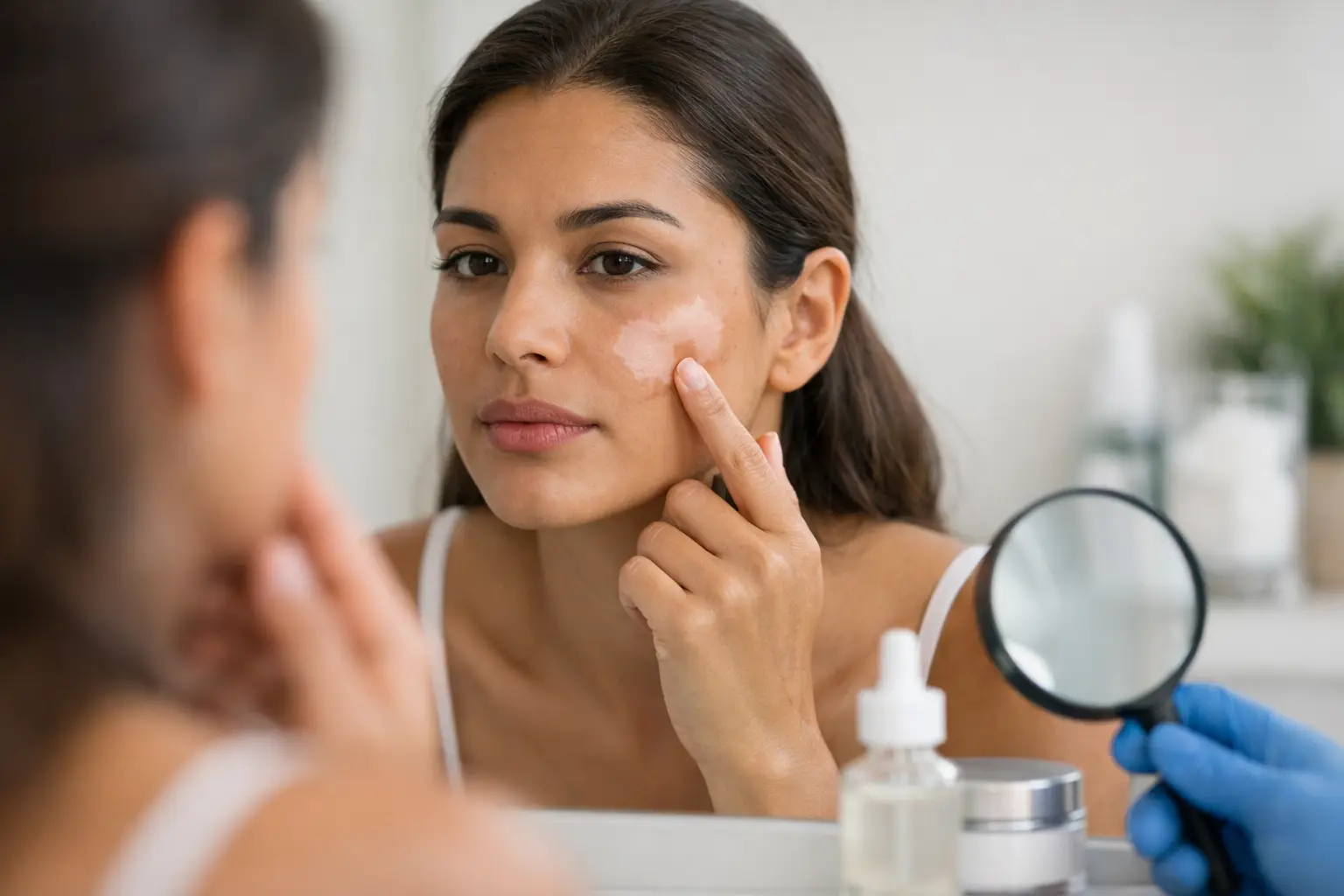
A pale patch can be far more noticeable than its size suggests, particularly after a scar, burn, surgical procedure or flare of skin inflammation. If you are researching how to treat hypopigmentation, the first distinction is crucial: some treatments aim to encourage pigment return, while others carefully camouflage the contrast. The safest and most convincing route depends on why the skin lost colour, whether the area is stable, and how the surrounding skin behaves.
Hypopigmentation is not a single condition. It describes skin that has less melanin than the surrounding area. It may follow trauma, acne, eczema, psoriasis, a chemical injury, laser treatment or surgery. It can also occur with vitiligo, certain fungal infections, inherited conditions and inflammatory skin disorders. A specialist plan starts with the cause, not simply the colour difference visible in the mirror.
How to treat hypopigmentation: start with diagnosis
New, spreading or unexplained areas of pigment loss should be assessed by a GP or dermatologist before cosmetic treatment is considered. This is particularly relevant if patches are chalk-white, have sharp or changing borders, involve hair that has turned white, itch, scale, or appear alongside other changes in health. Vitiligo and post-inflammatory hypopigmentation can look similar at first glance, yet their treatment pathways are different.
A medical professional may examine the area under specialised light, review your skin history and rule out infection or active inflammation. Where an underlying condition is identified, controlling it comes before any camouflage procedure. Treating eczema, psoriasis or an infection may allow the skin to settle and reduce the chance of creating further unevenness.
For scars and stretch marks, timing matters just as much as diagnosis. Fresh scars are often pink, red, raised, itchy or actively remodelling. They need time to mature. Introducing needles, pigment or intensive resurfacing too early can prolong inflammation and compromise the eventual result. A stable scar is usually flat, fully healed and no longer changing in colour or texture, though individual healing times vary considerably.
The difference between repigmentation and camouflage
Clients are often told that every pale patch can be restored to its original colour. In reality, melanocytes – the cells that produce pigment – may be temporarily disrupted, reduced or absent. That is why expectations need to be clinically grounded.
Repigmentation treatments are designed to help pigment-producing cells recover or migrate where this remains biologically possible. Depending on the diagnosis, a dermatologist may recommend prescribed topical treatment, controlled phototherapy or other medical options. These approaches can be valuable for suitable cases, especially when pigment loss is active or linked to a recognised dermatological condition. Results are variable, usually gradual, and can take months.
Camouflage does something different. Medical cosmetic tattooing places carefully selected pigment into the skin to reduce the visible contrast between the lighter area and surrounding tone. It does not cure vitiligo, create melanocytes or change the underlying condition. When performed on stable, suitable skin, it can make scars, healed burns, stretch marks and longstanding areas of hypopigmentation far less conspicuous.
This distinction protects clients from misleading promises. The goal may be pigment recovery, optical blending, scar improvement, or a combination delivered in the right order.
Specialist options for stable pale scars and patches
The best treatment is selected after assessing both colour and skin quality. A pale scar that is also raised, indented, tight or shiny may need texture-focused work before it is ready for camouflage. Pigment placed into unsuitable scar tissue can heal unpredictably, appear patchy or fail to retain.
Medical-grade microneedling and radiofrequency microneedling may be considered where scar texture, collagen disruption or stretch mark depth is the primary concern. These treatments create controlled micro-injuries intended to support remodelling. They can improve the way light reflects from the skin, which sometimes reduces the apparent contrast of a pale mark even before pigment is introduced. They do not guarantee the return of natural melanin.
MCA inkless needling is another specialist approach used within scar and stretch mark revision. It focuses on controlled stimulation without placing colour into the skin. For appropriate mature scars, it may support tissue quality and prepare an area for later camouflage. It is not suitable for every scar type, and it should never be presented as a replacement for medical care when pigment loss is active or unexplained.
Scar and stretch mark camouflage tattooing is often the most direct cosmetic option for stable hypopigmentation. A practitioner custom-blends pigments against the client’s undertone, depth of skin tone and the colour of the surrounding area. This is not a simple exercise in choosing beige. Skin can contain warm, cool, olive, golden, red or muted undertones, and these shift between body areas and seasons.
A skilled treatment plan usually builds colour gradually. An initial session establishes a conservative foundation, then the healed result guides further adjustment. Most clients require more than one session. This staged approach is especially valuable on scars, where retention may vary across a single area.
What makes someone suitable for pigment camouflage?
A specialist consultation should examine more than the patch itself. Suitability is shaped by several factors:
- The cause of pigment loss and whether it has been medically assessed.
- The stability, age, texture and sensitivity of the scar or affected skin.
- Your natural undertone, tanning habits and likelihood of significant seasonal colour change.
- A history of keloid scarring, allergies, autoimmune disease, diabetes, poor wound healing or medication that affects healing.
A patch test can be useful, particularly for reactive skin or where scar behaviour is uncertain. It gives the practitioner a chance to observe healing and pigment retention before committing to a larger area. No ethical specialist should promise an exact colour match on the day of treatment. Freshly implanted pigment appears different during healing, and final colour is judged only after the skin has settled.
Why DIY fixes often create more contrast
Over-the-counter creams can be helpful when prescribed or recommended for a diagnosed condition, but random brightening products, acids and aggressive exfoliation are not a reliable answer to pale marks. They may irritate the surrounding skin, trigger further post-inflammatory colour change or make the border between normal and hypopigmented skin more obvious.
Sun exposure also complicates matters. When surrounding skin tans, a hypopigmented patch may stand out more sharply. Daily broad-spectrum SPF is sensible for protecting skin and limiting contrast, but it cannot restore lost pigment cells. Self-tan can offer temporary visual blending for some body areas, although it may develop unevenly on scar tissue and should be tested cautiously.
At-home tattooing, skin-colouring pens and heavily pigmented make-up are equally poor substitutes for specialist work. They rarely account for undertone, can transfer or oxidise, and may encourage people to treat skin that is not yet healed. A correction is often more complex than a careful first treatment.
Aftercare affects the final result
Camouflage tattooing and skin revision treatments create a controlled healing process. The treated area must be kept clean, protected from friction and left to heal without picking, scratching or premature exfoliation. Your practitioner will give procedure-specific aftercare, but avoiding swimming, saunas, strenuous sweating and direct sun exposure during the early healing period is commonly advised.
Do not judge the result while the area is dry, flaking or newly healed. Pigment can appear darker immediately after treatment, then lighter as the skin renews. Review appointments allow the colour to be assessed once it has stabilised and enable precise refinements where needed.
Long-term, camouflage pigment may require maintenance. Natural skin tone changes with sun exposure, ageing, hormones and lifestyle, while implanted pigment can soften over time. This is a trade-off worth discussing openly: the treatment can create a significant confidence-restoring improvement, but it is not a one-time guarantee that the skin will remain identical in every light and season.
Choosing a practitioner for hypopigmentation correction
Look for a practitioner whose work demonstrates healed results, not only photographs taken immediately after a procedure. They should understand scar tissue, colour theory across diverse skin tones, contraindications, infection control and when to refer back to a medical professional. Ask how they assess stability, whether they patch test, how they formulate colour and what happens if the skin retains pigment unevenly.
At Ink Illusions, this assessment-led approach is central to paramedical tattooing. The aim is not to make skin look artificially covered. It is to create a carefully planned reduction in contrast that respects the skin’s healing history, texture and natural variation.
Pale patches can carry a private emotional weight, whether they follow surgery, injury, childbirth, acne or a long-term skin condition. The most helpful next step is a proper assessment that gives you clear options, realistic outcomes and the confidence to choose treatment on your own terms.
