

Scar Revision vs Camouflage: Which Is Best?
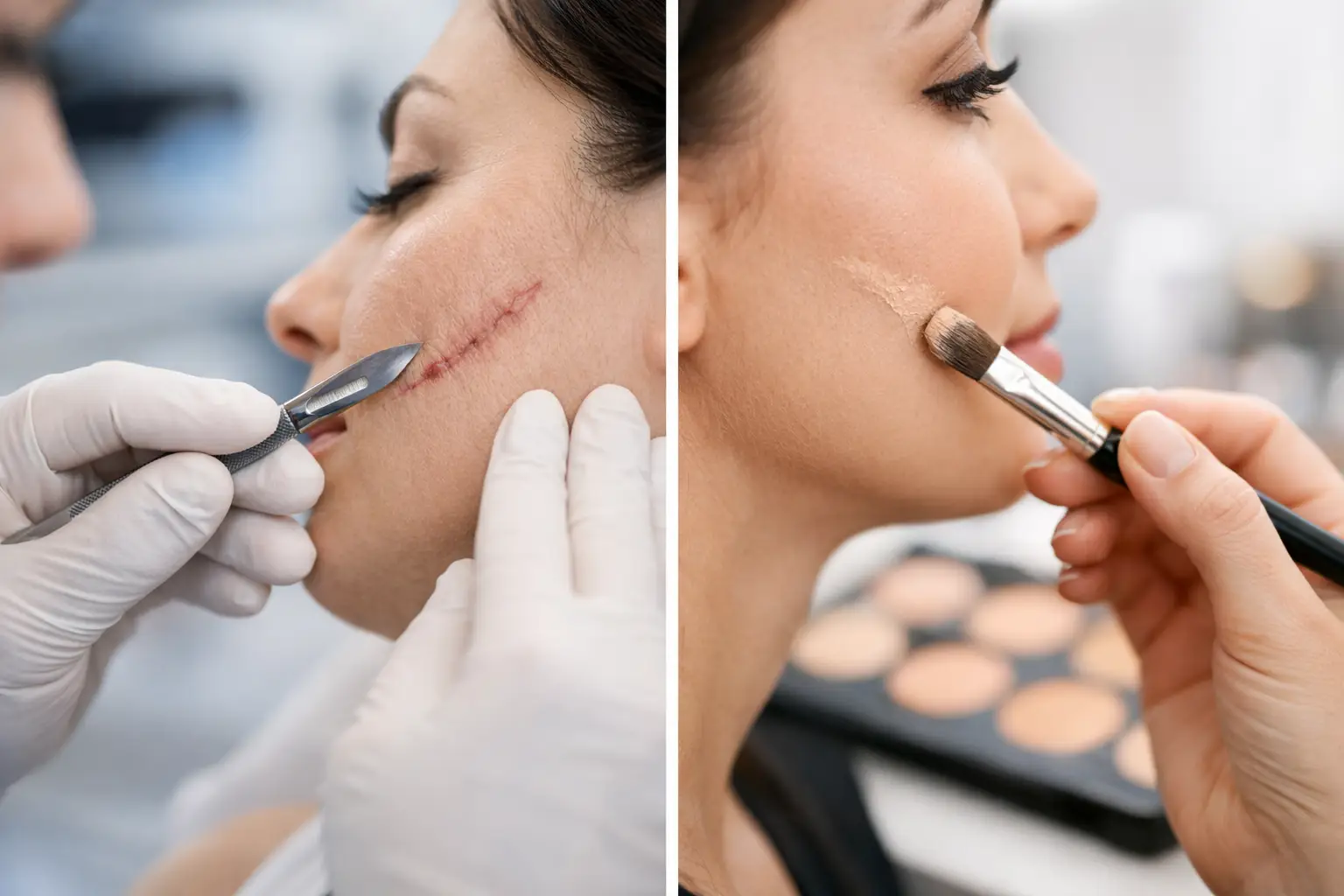
A scar can be fully healed and still feel unfinished. It may pull, sit raised above the surrounding skin, appear pale or dark, or draw attention because its colour no longer matches the area around it. When considering scar revision vs camouflage, the right choice depends less on which treatment sounds more dramatic and more on what the scar needs: structural improvement, colour correction, or a carefully phased combination of both.
For many clients, the aim is not to erase a scar completely. That promise is neither realistic nor responsible. The aim is to reduce how noticeable it is, improve how the skin looks and feels where possible, and help the scar become less of the first thing they see in the mirror.
Scar revision vs camouflage: the key difference
Scar revision refers to treatments intended to improve the scar tissue itself. Depending on the scar and the practitioner’s clinical scope, this can include surgical revision, medical treatments, laser-based approaches, microneedling, radiofrequency microneedling, peels, or specialist skin-repair methods such as MCA inkless needling. The focus is often texture, thickness, tightness, contour and the quality of the skin.
Camouflage, by contrast, is a paramedical tattooing treatment. Custom-blended pigment is implanted into the skin to bring a pale, dark or irregular scar closer to the surrounding skin tone. It does not remove scar tissue or flatten a raised scar. What it can do is soften contrast, reduce visual interruption and create a more balanced appearance once the skin is suitable for tattooing.
This distinction matters. A scar that is raised, tethered, red, unstable or still changing may need revision work before camouflage is considered. A scar that is flat, mature and healthy but visibly lighter than the surrounding skin may be an excellent camouflage candidate.
When scar revision may be the stronger first step
Scar revision is generally considered when the scar’s physical characteristics are the main concern. This may include scars that feel tight or uncomfortable, sit above or below the skin surface, have uneven texture, or limit movement. Surgical scars, burns, trauma scars and some self-harm scars can vary hugely in behaviour, even when they appear similar at first glance.
A treatment such as MCA inkless needling may be used to encourage the skin’s natural repair response without adding pigment. Radiofrequency microneedling can also be considered for certain textural concerns. These approaches are not instant fixes. Scar tissue remodels gradually, and multiple sessions may be needed before a meaningful change in texture or elasticity is seen.
In some cases, a surgical scar revision carried out by an appropriately qualified medical professional may be the better route. For example, a widened scar, a poorly positioned scar or one causing functional restriction may need a medical assessment rather than a cosmetic tattoo solution. Camouflage applied too early or over unsuitable tissue can make the area harder to manage later.
Revision also has limitations. It cannot guarantee that a scar will disappear, and any procedure that disrupts the skin has a healing period and a degree of uncertainty. Some people form pigment changes or thicker scar tissue after injury. This is why a detailed history, realistic expectations and conservative treatment planning are essential.
Signs a scar may need assessment before pigment
A specialist will usually pause before camouflage if a scar is still red, itchy, tender, raised, actively changing, prone to keloid formation or less than fully healed. Scars should normally be mature and stable before pigment implantation is considered. This often means waiting at least 12 months after surgery or injury, although healing timelines differ widely.
Skin tone, medication, medical history, previous treatments, sun exposure and the scar’s location all influence suitability. A scar across the chest, abdomen, face or joint may behave differently from one on the thigh or lower leg. The right approach is always individual.
When scar camouflage can make the greatest difference
Camouflage is particularly valuable when a scar is flat, settled and healthy, but its colour creates contrast against the surrounding skin. Common examples include pale surgical scars, areas affected by burns, scars following breast surgery, old injury marks and post-operative pigmentation changes.
The process begins with colour analysis. Skin is not one flat shade, and neither is a successful pigment blend. Undertone, depth, warmth, surrounding colour variation and how the skin changes across the area all need to be considered. This is especially important for deeper skin tones, where poorly matched pigment can heal too cool, too warm or too light.
A skilled practitioner does not simply select a pigment called “beige” or “brown” and place it into the scar. They assess the skin in natural light, formulate a bespoke blend and implant pigment with a technique designed for compromised tissue. Scar tissue can take colour differently from healthy skin, so conservative layering and review appointments are often part of the process.
The visual result develops during healing. Freshly implanted pigment can look stronger initially, then soften as the skin recovers. A top-up session may be required to refine the match, particularly where the scar has varied density or absorbs pigment unevenly.
What camouflage cannot correct
Camouflage cannot flatten a hypertrophic scar, release tethering, remove active redness or restore lost skin texture. It also cannot reliably match skin that tans significantly during summer and becomes much lighter during winter. A good result is designed to make the scar less obvious in everyday conditions, not to create an unrealistic airbrushed effect under every light source.
For clients with stretch marks, the same principle applies. If stretch marks are deep, wide or texturally indented, skin-repair work may be recommended before pigment camouflage. Once the skin is more even, a tailored stretch mark camouflage treatment can reduce the contrast that makes marks stand out.
Why a combined plan is often the answer
The choice between revision and camouflage is not always either-or. Some of the most natural-looking outcomes come from a staged approach: first improve texture and skin quality, then reassess whether colour correction will add value.
For example, a mature abdominal surgery scar may initially be uneven and pale. Inkless needling or radiofrequency microneedling may help improve the tissue’s texture over a series of appointments. Once healing is complete and the scar is stable, paramedical tattooing can address the remaining difference in colour. The result is not a new piece of skin, but a scar that is less noticeable both close up and at a normal social distance.
This staged method also protects the outcome. Pigment should not be used to conceal a concern that needs medical review or further repair first. Taking more time at the beginning can prevent disappointment, unnecessary cost and avoidable correction work later.
Choosing a practitioner for scar work
Scar treatment is not standard permanent make-up. It requires an understanding of wound healing, pigment behaviour, contraindications, skin anatomy and the psychological weight a visible scar can carry. Before booking, look for a practitioner who can explain what the treatment can and cannot achieve, assess healed scar tissue in person and show evidence of work across different scar types and skin tones.
Ask how they determine suitability, whether they use patch tests where appropriate, how they plan colour matching and what aftercare is required. You should also understand the likely number of sessions, the healing intervals and the possibility that the treatment plan may change once the skin’s response becomes clear.
At Ink Illusions, this specialist assessment is central to treatment planning. Advanced paramedical work should never be approached as a one-size-fits-all cosmetic procedure. The technique, pigment selection and sequence of treatments must be chosen around the individual scar.
The most useful question to ask
Rather than asking, “Can you cover this scar?”, ask, “What does this scar need first?” That question opens the door to a more honest recommendation. It may need time, texture-focused revision, medical input, camouflage, or a combination delivered in the right order.
A thoughtful treatment plan respects both the biology of the skin and the person living in it. When the scar is assessed properly, the goal becomes clearer: not perfection, but skin that feels more familiar, more balanced and easier to live with.
