

Does Scar Camouflage Suit All Skin Tones?
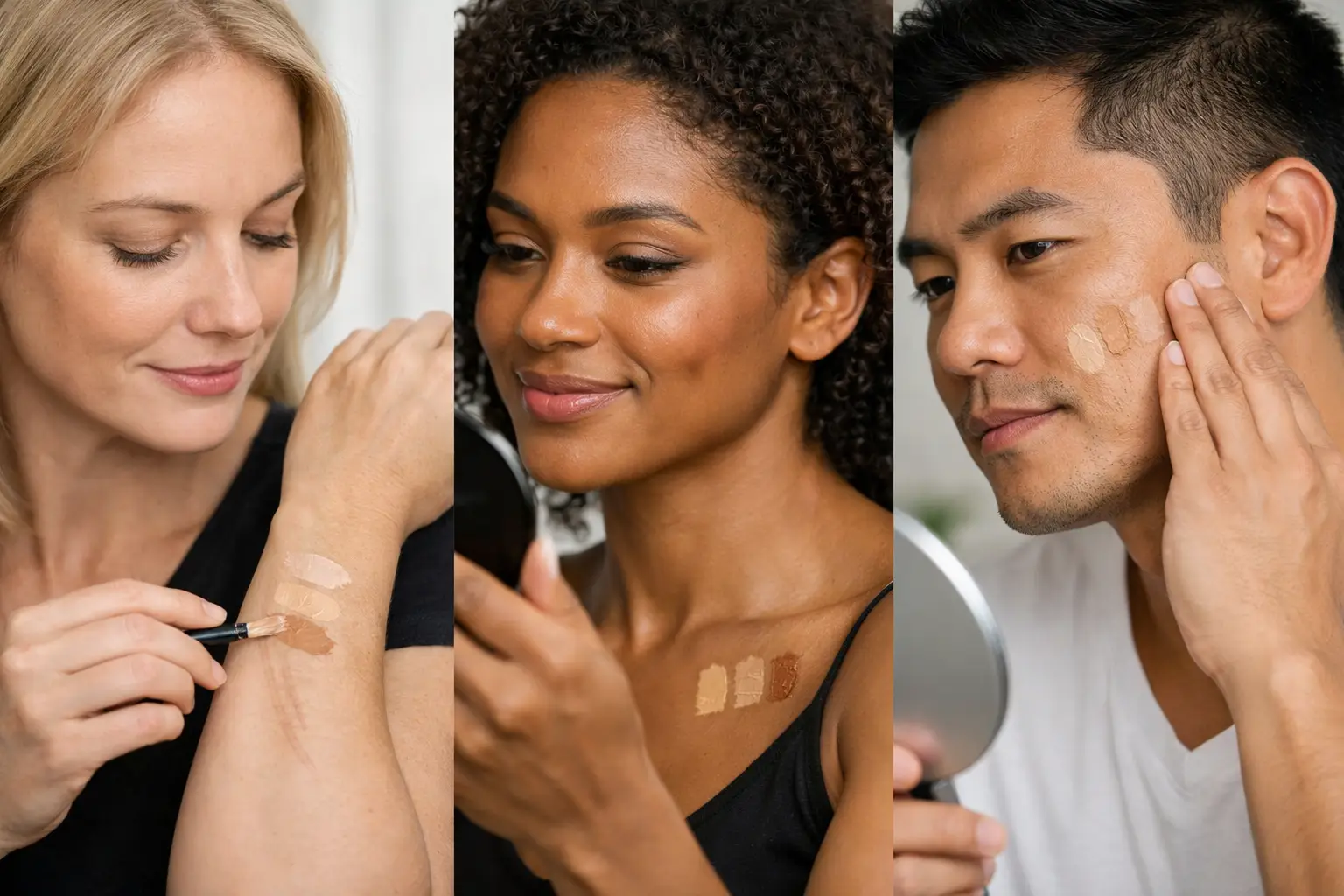
A scar may be pale against deep skin, dark against fair skin, red, purple, shiny, indented or raised. That variation is exactly why people ask, does scar camouflage suit all skin tones? The informed answer is that scar camouflage can be created for every skin tone, but it is not a one-pigment, one-appointment treatment. Safe, believable results depend on scar suitability, accurate colour theory, skin behaviour and the specialist skill of the practitioner.
At Ink Illusions, scar and stretch mark camouflage is approached as a paramedical treatment, not a standard cosmetic tattoo. The goal is not to make a scar disappear or to chase a perfect skin-coloured match on day one. It is to reduce contrast, soften the visibility of the affected area and create a result that sits naturally within the client’s individual complexion.
Does scar camouflage suit all skin tones?
Skin tone alone should not exclude someone from scar camouflage. Clients with fair, olive, brown and deep complexions can all be suitable for treatment when the scar has healed correctly and their skin is assessed in detail. However, suitability is never determined by complexion alone.
A specialist must consider the scar’s age, texture, stability and underlying colour, alongside the client’s natural tone and undertone. A scar that is still red, inflamed, thickened, unstable or prone to keloid formation may need more time, medical clearance or an alternative treatment plan before pigment camouflage is considered.
This distinction matters. Treating a scar too early can compromise healing and lead to unpredictable pigment retention. Treating the wrong type of scar with a camouflage approach can also draw more attention to its texture. Colour can reduce contrast, but it cannot flatten raised tissue or fully fill a deep indentation. Honest assessment protects both the result and the client.
Why matching pigment is more complex than matching foundation
Foundation sits on the surface and can be removed at the end of the day. Camouflage pigment is implanted into healed skin, where the body’s healing response and the scar tissue itself influence how the colour settles. This is why selecting a shade by eye alone is not enough.
Skin is made up of layers of colour. There may be warmth from yellow or golden undertones, coolness from blue, red or pink undertones, depth from melanin and surface changes caused by tanning, dryness or circulation. Scar tissue adds another variable. It can appear white due to a lack of pigment, darker following inflammation, red because of vascular activity, or grey and muted because of the way light reflects from altered tissue.
On deeper skin tones, accurate colour selection is particularly important. Using a pigment that is too light, too cool or too opaque can make the scar appear ashy once healed. On fair skin, a pigment with too much warmth can heal noticeably orange or yellow. The right formula is often a customised blend, adjusted during the course of treatment as the skin reveals its healed response.
A practitioner should assess the surrounding skin in more than one area, because the body is not one uniform shade. The abdomen, thigh, breast, arm and face may all carry different levels of warmth and pigmentation. Seasonal tanning and natural hormonal changes can also affect how close a camouflage result appears at different times of year.
The scar must be ready, not simply old
Many clients are told to wait a year after surgery or injury, and this is often a sensible starting point. Yet time alone does not confirm that a scar is ready. A mature scar is usually fully closed, stable in colour, no longer painful or itchy, and free from active inflammation. It should not be changing week by week.
Some scars mature earlier, while others take longer. Surgical scars, burns, C-section scars, trauma scars and self-harm scars can all heal differently. A consultation should include a visual and tactile assessment, a discussion of medical history and an understanding of how the client’s skin has healed in the past.
When texture is the dominant concern, medical camouflage tattooing may be paired with or preceded by treatments designed to improve the quality of the scar tissue. MCA inkless needling, for example, may support collagen stimulation in suitable scars and stretch marks before pigment work is introduced. The sequence depends on the individual concern. Colour restoration is often more effective once the skin is calmer, softer and more receptive.
What results should clients realistically expect?
The strongest scar camouflage results are often the least obvious. Rather than looking tattooed, the treated area should blend more quietly with the surrounding skin from a normal social distance. This can be particularly transformative for scars that create a strong light-to-dark contrast, including pale surgical scars on deeper skin and darker marks on lighter complexions.
Results are usually built gradually. A patch test may be advised, particularly where there is a history of sensitivity, unusual scarring or complex pigmentation. The first session establishes how the scar accepts pigment. Follow-up sessions allow the practitioner to refine tone, saturation and warmth after healing. Trying to achieve full coverage in a single session can create an overworked or unnatural-looking outcome.
It is also important to understand that scar camouflage does not react to sunlight in the same way as untreated skin. Natural skin may tan, while scar tissue and implanted pigment change differently. Wearing appropriate sun protection and managing expectations around holidays, tanning and long-term maintenance is part of responsible aftercare.
When scar camouflage may not be the right treatment
There are situations where a specialist may recommend waiting, declining treatment or referring a client for medical advice. Active skin conditions, open wounds, infection, uncontrolled diabetes, recent isotretinoin use, pregnancy-related considerations and a known tendency towards severe keloid scarring all require careful review.
Very raised scars can be difficult to camouflage because light catches the change in texture, even when the colour is well matched. In these cases, treatment may still be possible, but the objective must be realistic: reduce colour contrast rather than promise invisibility. Likewise, scars with active redness or purple tones may benefit from further maturation or a treatment plan that addresses vascular activity before camouflage pigment is applied.
Clients with vitiligo or unstable pigment conditions need especially thorough assessment. Camouflage may be an option in stable areas, but the condition’s activity and medical history should guide the decision. A qualified practitioner will not treat every presentation in the same way simply to provide a service.
What specialist training changes for every complexion
Working across all skin tones requires more than a broad pigment range. Practitioners need a detailed understanding of undertones, colour correction, healed pigment behaviour, scar physiology and skin response. They must also know when not to proceed.
This is one reason advanced paramedical tattooing should not be confused with conventional tattoo cover-up or general permanent make-up. The equipment, pigment selection, implantation approach and consultation process must be adapted to compromised skin. The practitioner is working with tissue that may be thinner, denser, less elastic or less predictable than healthy skin.
For professionals entering this field, regulated education and hands-on case assessment are essential. Before-and-after photographs can demonstrate potential, but they should be reviewed with care. Look for healed results across a range of complexions, not only fresh treatment images. A credible provider will show an understanding of gradual improvement, maintenance and the limits of the procedure.
Questions to ask at a scar camouflage consultation
A thorough consultation should leave you clear on whether your scar is ready, what outcome is realistic and how many sessions may be needed. Ask how the practitioner evaluates undertone and whether they work with customised pigment blends. Discuss your medical history, previous treatments, sun exposure, allergies and any past tendency to heal poorly.
You should also ask to see healed examples on skin similar to yours where possible. This is particularly valuable for clients with deeper skin tones, where poor colour theory can produce unwanted cool, grey or overly light results. Specialist experience should be visible in both the consultation and the portfolio.
The best scar camouflage treatment does not try to force every scar into the same solution. It respects the way your skin has healed, works with your natural tone rather than against it, and builds improvement carefully. For the right candidate, that considered approach can make a visible difference not only to the scar, but to the confidence carried with it.
