

Can Laser Removal Lighten Eyebrow Tattoos Safely?
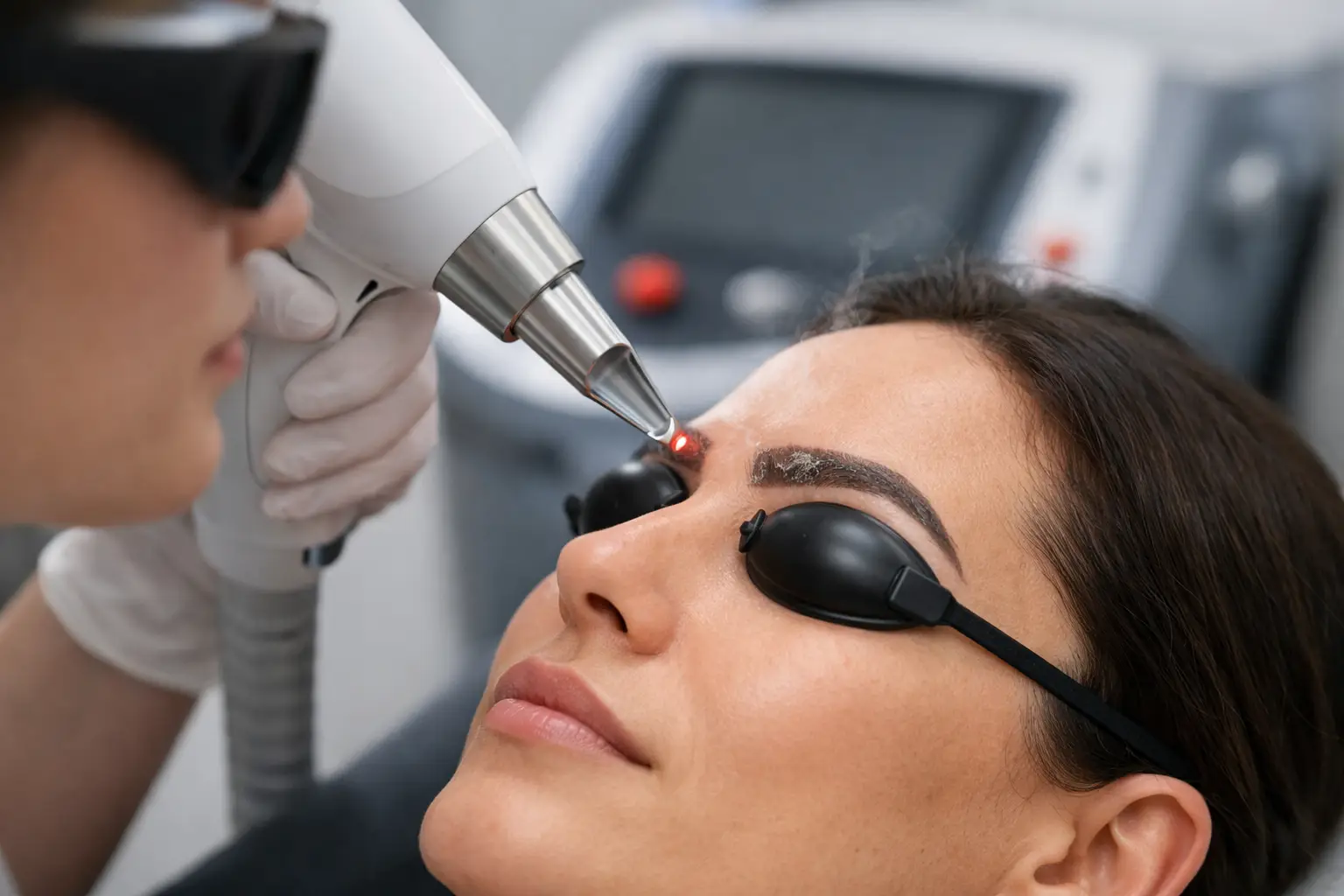
An eyebrow tattoo that has healed too dark, too warm, too ashy or simply no longer suits you can feel far more visible than it should. So, can laser removal lighten eyebrow tattoos? Yes, in many cases laser treatment can significantly soften unwanted brow pigment. However, eyebrow tattoo removal is not a one-setting procedure or a guaranteed route to a completely blank canvas. The pigment formula, its depth, its age and how your skin responds all shape the result.
For cosmetic tattooing, the priority is controlled correction. That may mean lifting the colour enough for a new brow design, reducing a dense block effect, or gradually clearing the area where full removal is realistic. A specialist assessment is what turns laser removal from a hopeful guess into a considered treatment plan.
Can laser removal lighten eyebrow tattoos without removing them fully?
It can. Laser energy is absorbed by pigment particles, breaking them into smaller fragments that the body can gradually process. Each session may reduce saturation, alter the visible tone or both. For many clients, a lighter eyebrow tattoo is the desired outcome because it creates room for a more flattering correction rather than chasing total removal.
This distinction matters. A faded grey-brown brow may be easier to neutralise and redesign than a heavily saturated tattoo. Equally, someone with old microblading that has blurred into a solid shadow may only need enough pigment reduction for a fresh, natural-looking result.
The number of sessions varies widely. Some older organic pigments respond quickly, while dense machine work, multiple previous cover-ups and resistant colours can require several sessions. Treatments are normally spaced apart to allow the skin to recover and the body time to clear fragmented pigment. Rushing sessions is not a shortcut to better clearance and can increase unnecessary trauma to the skin.
Why cosmetic brow pigment behaves differently
Not all eyebrow tattoos are the same. Microblading, machine hairstrokes, powder brows, ombré brows and older forms of semi-permanent make-up can contain very different pigment blends. The label “semi-permanent” describes a cosmetic procedure, not a promise that every pigment will fade evenly or disappear within a fixed timeframe.
Some pigments contain iron oxides, titanium dioxide or mineral components. When exposed to laser energy, these can occasionally undergo a colour shift before they fade. A brown pigment may initially reveal red, orange, pink, grey or yellow undertones. In some circumstances, a light beige or flesh-toned pigment can temporarily darken through oxidation.
This is why treating brows as if they were a straightforward black body tattoo can produce disappointing results. The visible shade is only part of the picture. A skilled practitioner considers the likely pigment composition, previous treatments, whether the work has been covered or corrected, and the client’s skin tone before selecting a suitable approach.
A colour change does not automatically mean treatment has failed. It may be a predictable stage in breaking down a complex pigment blend. What matters is whether the practitioner has recognised the risk, explained it in advance and planned the appropriate next step.
The value of a test patch
A test patch is particularly valuable when the pigment history is uncertain, when the brows contain light or warm tones, or when there is a risk of oxidation. A small, discreet area can reveal how the pigment and skin are likely to respond before the full brow is treated.
It also gives time to assess healing. Specialist laser work is not about making a dramatic decision on the day. It is about collecting useful information, protecting the skin barrier and choosing a treatment pathway with realistic expectations.
What happens during a specialist eyebrow tattoo removal consultation?
A proper consultation should go beyond asking when you had your brows done. Your practitioner should review the brow area closely, assess the pigment’s tone and saturation, discuss the original technique and any prior removal or corrective work, and identify factors that could affect healing.
Medical history matters too. Certain medications, active skin conditions, a history of poor scarring, recent sun exposure, pregnancy or breastfeeding, and tendencies towards post-inflammatory hyperpigmentation may alter whether treatment is appropriate or when it should take place. Clients with deeper skin tones need a plan that respects their individual pigmentation response rather than a one-size-fits-all setting.
Clear photographs are useful for tracking gradual change. They also keep decisions objective. Brow pigment can look different under bathroom lighting, daylight and make-up, so comparing progress properly helps avoid treating beyond the point needed for a correction.
At Ink Illusions, this specialist-led thinking is central to corrective work. The aim is not simply to fire a laser at pigment. It is to make carefully judged progress while preserving the quality of the skin for whatever comes next.
Safety considerations around the eye area
Eyebrows sit close to one of the most sensitive areas of the face. Protective eyewear suitable for the laser wavelength is essential for both client and practitioner. This is not an optional extra, and ordinary sunglasses do not provide adequate protection.
The skin may look white or frosted immediately after treatment, followed by redness, tenderness and mild swelling. Small scabs or crusting can occur during healing. These should be left alone. Picking, exfoliating or applying unsuitable products can prolong recovery and raise the risk of unwanted textural change or infection.
There can also be temporary lightening of eyebrow hair, especially when treating dark pigment. Hair usually returns to its normal colour as it grows through, but this should be discussed before treatment. A reputable practitioner will never promise zero risk, particularly where prior tattoo work, skin sensitivity or complex pigment chemistry is involved.
Preparing for treatment and protecting the result
Good preparation supports safer treatment. Arrive with clean brows and no brow pencil, tint, fake tan or active skincare products around the area. Avoid sun exposure and tanning before appointments, as tanned or irritated skin may not be suitable for laser treatment. Your practitioner may also advise you to pause specific retinoids or exfoliating products, depending on your routine and skin condition.
Aftercare is equally important. Keep the treated area clean, dry and protected as instructed. Avoid heat, heavy exercise, swimming, steam rooms and direct sun exposure while the skin is settling. Do not apply make-up to broken or irritated skin. Once the area has healed, high-factor SPF helps protect the skin from ultraviolet exposure and reduces the chance of uneven pigmentation.
If you experience increasing pain, spreading redness, discharge or any reaction that concerns you, seek professional advice promptly. A treatment plan should include access to clear aftercare guidance, not just the procedure itself.
When laser may not be the first choice
Laser is highly effective for many unwanted eyebrow tattoos, but it is not always the right first step. Very fresh cosmetic tattooing may call for urgent assessment, as early removal options differ from treatment of healed pigment. Brows that are already extremely faint may be better corrected with careful colour work rather than further removal. If the skin is inflamed, compromised or healing poorly, treatment should wait.
Some cases benefit from a combined corrective strategy. This may involve selective laser lightening, a full healing period, then expert colour correction or a redesigned cosmetic tattoo once the skin is stable. The best approach depends on the end goal: clearer skin, softer brows or a completely new shape.
For practitioners, this is also a reminder that laser knowledge must extend beyond operating a device. Correctly identifying likely pigment behaviour, contraindications, skin responses and the limits of treatment is what protects clients and professional standards.
A lighter eyebrow tattoo can create a genuine fresh start, but only when the process is paced, assessed and tailored to the pigment in front of you. Choose expertise over quick fixes, allow the skin the time it needs, and treat each stage as part of a carefully planned correction.
