

Tattoo Removal Before and After: What Results Can You Expect?
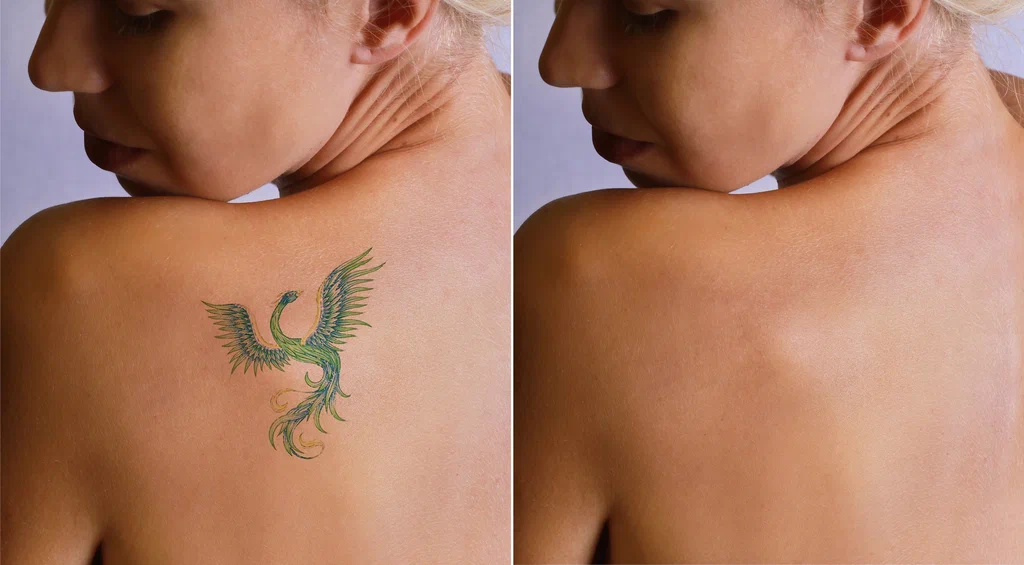
Expect from tattoo removal before and after, including results, healing, and factors that affect fading and skin recovery.
Removing a tattoo is no longer something that people are shocked by. People decide to remove or lighten an old tattoo for a variety of reasons, changing of careers, personal development, liking changes, or simply because the design doesn’t match their life anymore.
The methods for tattoo removal have improved quite a bit over the last twenty years, which means that the process is now much safer and results are more stable. Still, the question of whether the after effect can be as good as shown in the pictures keeps coming into the minds of people.
We shed light on those aspects of the tattoo removal journey that are often misunderstood or remain under the surface, thus aiming not just for ignorance but also for a better understanding amongst our readers.
What Drives One to Take off a Tattoo
Despite tattoos being an expression of one’s innermost self, anybody’s style or condition can be changed by time. Some people wish they didn’t do that, a decision made on a whim; however, to others removing tattoos may be a requirement for their careers.
Breakup tattoos, rewired-designed, art of low quality are amongst the most frequent reasons behind the removal of the tattoos. To understand how your removal journey will be, you must clarify not only the reason but also the type of result you want – total disappearance or just lightening up so that it can be decorated over.
Grasping the Principles of Current Methods
Fading a Tattoo Removal nowadays is mainly done with the help of laser technology. Lasers highlight one spot at a time with their light energy and shatter the ink particles to the smallest sizes. The most recent biomolecular research helps to understand the entire removal process including the role of the immune system.
Long-faded methods such as dermabrasion and surgical excision still linger but are not favored because of scars and long healing periods. The laser intervention has become the standard method as it is the most compatible of the two extremes, results and the safety of the skin.
The Reality Behind “Before and After” in Tattoo Removal
Photos taken before and after a treatment can be motivating but at the same time they can falsely advertise. The word “After” seldom stands for an immediate and perfect result. Most of the time it shows considerable fading progress after several treatments.
The final results depend upon skin color, ink location, and the healing process. The key to success lies in having correct assumptions: the process of removal takes time and more than one treatment session, it is not a single treatment miracle.
What Determines Removal Results
The effectiveness of a tattoo removal may depend on several factors such as:
- the color of the
- skin
- the age of the tattoo
- the density of the ink
For instance, a black-and-dark-blue tattoo will be removed in a shorter time frame as compared to a green-yellow-white one. A fair complexioned person may see the removal of his tattoo progress faster, however, a modern laser can treat even a dark skin without any risk.
As tattoos become older, usually it becomes easier to remove them. A professional one is definitely more advanced, deeper, and quite likely more colorful than a simple design done by the house of a friend.
Two different people’s tattoos may react differently to the same treatment in some cases.
How Ink Color Affects Fading
Colors are the main component when it comes to differences between the “before” and “after.” Also, when compared to the rest of the colors, black ink uses laser energy in the most efficient way, making laser removal much more simple and fast.
If the correct wavelength is used for these colors, then reddish and orange colors will be removed effectively; however, green and light blue may still need a number of sessions. White ink may become a little darker for some time before it fades, and this can definitely shock patients who least expect it.
Skin Type and Healing Capacity
The results are largely dependent on your skin’s natural healing ability. People who have a well-functioning immune system usually witness better fading during their sessions as their bodies are able to clear the ink fragments faster. Also, hydration, nutrition, and overall health have a great impact here. For instance, smoking can slow down the healing process and make the treatments less effective over time.
How Many Sessions Are Usually Needed?
Typically, a tattoo shops near me is required to undergo a minimum of six and a maximum of twelve sessions with the time between sessions being a few weeks. Some tattoos may show significant fading after only a few treatments while others may require more time.
In many cases, complete removal is possible whereas, most of the time, partial fading is the condition, which is generally enough, especially when the intention is to use the tattoo as a cover-up instead of having bare skin.
What Happens Immediately After Each Session
After the treatment, the area that has been treated might look white or frosted. The swelling, redness, as well as the mild blistering, are the effects of the treatment and usually go away within a couple of days. This immediate “after” is not the final outcome. The real fading takes place during the next few weeks when the body is getting rid of the ink fragments.
Healing Between Sessions: What to Expect
The process of healing is very important to the overall procedure. Excessively working the skin with very frequent treatments can lead to an increased scarring risk and the lowering of the effectiveness of the treatments.
Most experts advise a period of 6-8 weeks between the different sessions. During this period, you may see the gradual lightening of the tattoo, some fading in certain areas, or changes in ink tone – all of which are normal stages.
Long-Term Before and After Results
This is where the biggest differences are seen and it is a long time span after and before the pictures. Generally, after so many sessions, tattoos most of the time look broken up, lighter, and less defined. The sharpness of the lines diminishes, the shading gets uneven, and the colors lose their brightness. In many cases of good results, the tattoo is hardly visible, especially from a distance.
Can Tattoos Be Completely Removed?
Yes, in theory, it is possible to have a complete removal, however, it is not always like that. Sometimes inks can leave faint shadows or “ghosting” of the skin where the tattoo was disappeared. Some colors and deeply located layers of inks may be the ones that eventually end up resisting full removal. Honest consultations are vital in determining whether total clearance or a significant fading of your tattoo is a more feasible goal.
Risks and Side Effects to Consider
Although contemporary procedures are mostly safe, still there are the potential risks. The temporary alterations in skin pigmentation, slight scarring, or changes of the skin texture are possible mainly among those who are careless with the post-treatment care. The decision to hire a skilled practitioner and the adherence to recovery instructions greatly lessen the chances of these risks occurring.
Emotional Impact of Before and After Changes
Change is not only external. A lot of people declare they experience emotional relief as a result of their fading of the undesired tattoos. Some others become impatient during the slow progress. Realizing that the progress is slow helps to control the expectations and also to lessen the feeling of impatience. Every session is closer to the desired result.
The Importance of Professional Assessment
An expert consultation is a prerequisite for the prediction of the results. Seasoned specialists take into account the type of ink, the condition of the skin, and the medical history to create a treatment plan. This evaluation is helpful in setting realistic before-and-after expectations and also in lowering the number of unwanted surprises throughout the process.
Different parts of a tattoo, even those on the same individual, will each react differently to a treatment. A professional evaluation makes it possible to have a treatment plan that is tailored to the individual rather than a generic one which will fit all.
With this particular plan, a person will be able to figure out the approximate number of sessions, the correct laser settings, the interval between the treatments as well as the possibility of risks, thus helping the clients to know what to expect before they start the process.
Also, a trained professional can very well recognize symptoms that may need taking care of, for example, skin that is easily irritated, an area with a scarring history, or depigmentation disorders.
Besides, they explain the do’s and don’ts before and after the treatment, which is extremely important for the process of healing and the end result. If you skip this step or take non-professional advice, then you run the risk of getting poor fading, skin damage, or unnecessary complications.
Final Thoughts
One can often draw motivation from before-and-after comparisons, but they should be considered as rough illustrations rather than definite outcomes. Tattoo Removal
is a process that involves the qualities of patience, taking the correct measures, and having realistic goals. Under the expert’s guidance and using the modern technology, the majority of people reach a considerable change and most of the time, the positive feeling that comes from being free of the ink that is not wanted.