

Scar Camouflage Healing Stages: What to Expect
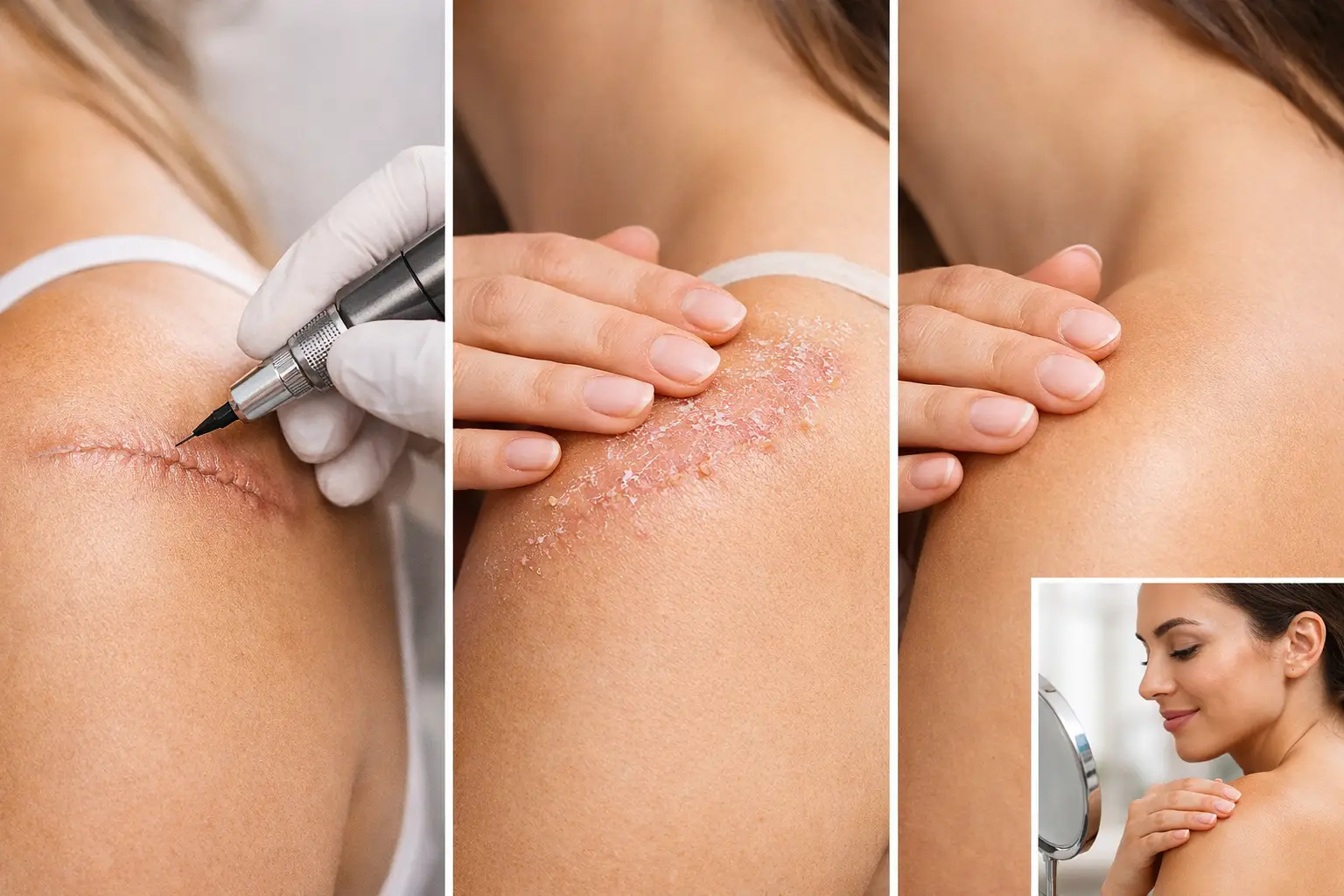
A scar can look settled to the eye while still being unsuitable for pigment. That distinction is central to safe, credible scar camouflage work. The scar camouflage healing stages begin long before a needle touches the skin and continue for weeks after treatment, as the skin repairs and the implanted colour settles into its true tone.
For clients, knowing what is normal prevents unnecessary worry when the area looks darker, warmer or less even than expected in the first few days. For practitioners, understanding each stage is what separates a colour deposit from a considered paramedical treatment plan. Scar camouflage is not designed to erase texture or make a scar disappear. Its purpose is to reduce contrast, restore visual harmony and make the area less immediately noticeable in everyday life.
Before camouflage: the scar must complete its own healing
A scar must be mature, stable and medically cleared before camouflage tattooing is considered. In many cases, this means waiting at least 6 to 12 months after surgery, injury or trauma. Some scars need longer, particularly following burns, extensive surgery, keloid activity, radiation treatment or complications with wound healing.
A suitable scar is usually flat or mostly flat, closed, no longer red or inflamed, and unchanged for a period of time. It should not be painful, itchy, weeping, crusting or actively thickening. The colour may still differ from the surrounding skin, but the tissue should feel calm and stable.
This waiting period is not a delay for the sake of caution. Newly healed tissue continues to remodel beneath the surface. Pigment placed into unstable tissue can heal unpredictably, shift in colour, fade unevenly or aggravate an already reactive scar. A specialist consultation should assess scar age, texture, location, skin tone, medical history and the client’s healing pattern before treatment is approved.
Raised scars, hypertrophic scars and keloid-prone skin require particular care. Camouflage may not be appropriate until the scar has been managed and stabilised by the relevant medical professional. Where texture is the dominant concern, treatments such as MCA inkless needling, radiofrequency microneedling or other scar revision approaches may be considered before colour work. The correct sequence matters.
Scar camouflage healing stages after treatment
Days 1 to 3: fresh pigment and surface sensitivity
Immediately after a scar camouflage session, the treated area commonly appears stronger, warmer or more saturated than the intended healed result. Mild redness, tenderness and a slight feeling of tightness can occur, especially where scar tissue is dense or has reduced elasticity.
The pigment can initially look too light, too dark or slightly different in undertone. This is not the final colour. Freshly implanted pigment is viewed through irritated skin, and the body’s early inflammatory response affects how it appears. The goal at this stage is protection, not inspection. Avoid repeatedly touching the area, stretching the skin or attempting to assess the final match too soon.
Days 4 to 10: dryness, light flaking and apparent fading
As the surface recovers, the area may become dry and lightly flaky. This is often the stage that causes the most anxiety because the camouflage can appear patchy or seem to have faded dramatically. A temporary pale or greyed appearance is common while the superficial skin barrier renews.
Do not pick, scratch or exfoliate loose skin. Pulling at flakes can disrupt healing and create uneven pigment retention. Aftercare should be followed precisely, including the recommended product application and hygiene protocol. Over-moisturising is no better than under-moisturising: heavy products, occlusion and excessive application can soften the surface too much and interfere with recovery.
Weeks 2 to 4: the colour begins to return
Once flaking has finished, the area often looks lighter than expected. This is sometimes called the ‘ghosting’ phase. The skin is still repairing below the surface, and the pigment has not yet fully revealed its healed character.
Over the following weeks, the tone usually returns gradually and becomes more integrated with the surrounding skin. This is why a professional practitioner will not judge a result, or plan a correction, immediately after the treatment. Scar tissue does not behave like healthy, untouched skin. It can retain pigment differently across the same scar, particularly where there are changes in thickness, blood supply or fibrosis.
Weeks 4 to 8: settling and true colour assessment
By around four to eight weeks, the camouflage result is clearer. Redness should have resolved, the skin should feel calm, and the pigment’s healed colour can be assessed against the surrounding complexion in natural light.
A degree of variation is normal. The aim is strategic blending, not a flat block of identical colour. Skin changes with temperature, tanning, circulation and lighting, while scars may have a different surface texture or reflect light differently. Even with an excellent colour match, a textured scar may remain visible at close range. The transformation is often most noticeable at conversational distance, in photographs and when clothing exposes the area.
Weeks 8 to 12: review and refinement
Most scar camouflage plans require more than one session. A review appointment is usually arranged after adequate healing, when retention can be judged safely. Areas that have healed lighter, warmer or less evenly may need additional layering or small colour adjustments.
This is not a sign that the first session has failed. It reflects the reality of working with compromised tissue. Scar age, location, skin type, immune response, aftercare, sun exposure and previous treatments can all affect retention. A staged approach gives the practitioner the control needed to build coverage conservatively rather than overworking the skin in one appointment.
What affects how scar camouflage heals?
The healing timeline depends on far more than the pigment used. The scar itself is a living record of how the body responded to trauma, and no two areas heal in exactly the same way.
Scars on high-movement areas, such as the abdomen, chest, shoulders, knees and joints, can be slower to settle because the skin is constantly stretching. Surgical scars may contain multiple tissue layers, while burn scars may have wider variation in texture and sensitivity. Skin exposed to sunlight is also more vulnerable to pigment shift and uneven tanning during recovery.
Lifestyle and health factors matter too. Smoking, poorly controlled diabetes, immune conditions, medication, active skin irritation and nutritional status can influence healing. Clients should disclose relevant information honestly at consultation. A responsible specialist may postpone treatment where there is a clear risk to skin integrity or results.
At Ink Illusions, specialist colour theory is paired with an assessment of the scar’s condition, not just its visible shade. Matching skin tone requires consideration of undertones, surrounding pigmentation and how the pigment will soften after healing. This is particularly important across diverse skin tones, where an unsuitable formula can heal too ashy, too warm or too opaque.
Aftercare that protects the result
Your practitioner’s written aftercare instructions take priority, as protocols may differ according to the treatment area and skin condition. In general, keep the area clean, avoid friction and do not expose fresh camouflage to direct sun, swimming pools, saunas, steam rooms or intense exercise until advised that it is safe.
Loose clothing can help prevent rubbing, especially on body scars. Avoid fake tan, active skincare ingredients, body scrubs and perfumed products near the area during the early healing period. Once healed, daily high-SPF sun protection is one of the most practical ways to protect colour stability, because tanning can increase contrast between the scar and surrounding skin.
Contact your practitioner promptly if you experience spreading redness, significant swelling, escalating pain, heat, discharge, fever or any symptom that feels outside the expected healing pattern. These are not concerns to manage at home. Where necessary, seek medical advice without delay.
When patience produces the best result
Scar camouflage is a precision treatment, not an instant cover-up. The strongest results come from respecting the scar’s biology, selecting pigment with restraint and allowing enough time between stages for the skin to communicate how it has healed.
For many clients, the meaningful change is not that a scar becomes invisible. It is that they stop planning outfits around it, checking it in every mirror or feeling that it is the first thing others see. That confidence is built carefully, one properly healed stage at a time.
