

How Much Does Scar Camouflage Tattooing Cost?
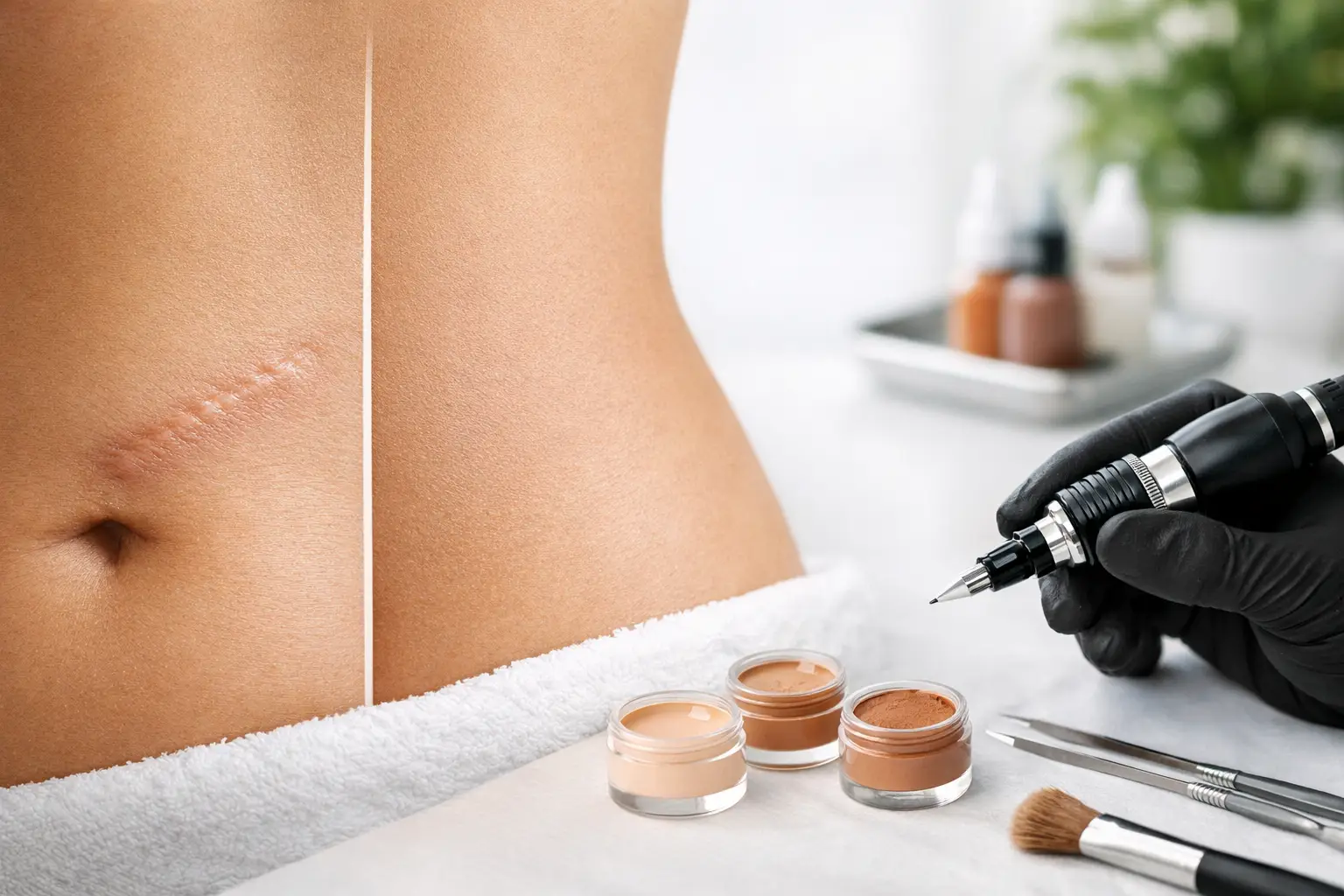
Price is usually the first question, but with scar work, it is rarely the most useful one on its own. If you are asking how much does scar camouflage tattooing cost, what you are really trying to understand is what level of expertise, colour matching, preparation, and session planning is required to create a result that looks believable on your skin.
Scar camouflage tattooing is a specialist paramedical treatment, not a standard beauty tattoo. It involves implanting custom-blended pigment into a scar or stretch mark to reduce contrast between the affected area and the surrounding skin. Done well, it can make a scar far less noticeable and restore confidence in clothing choices, intimacy, and day-to-day comfort. Done badly, it can leave flat-looking colour, poor undertones, or a result that draws more attention than the original concern.
How much does scar camouflage tattooing cost in the UK?
In the UK, scar camouflage tattooing commonly starts from around £150 to £400 for smaller, straightforward areas, with larger or more complex cases often ranging from £500 to £1,500 or more across a treatment plan. Some clinics charge per hour, while others price by area size, complexity, or a combination of both.
That range is broad for a reason. A small pale scar with stable surrounding skin is a very different treatment from a large surgical scar, a tummy tuck scar, self-harm scarring, burns, or extensive stretch mark camouflage. The skill level required, the time spent customising pigment, and the number of sessions needed all affect the final figure.
For many clients, the realistic question is not the price of one appointment but the likely investment from start to finish. Scar camouflage often needs more than one session to build colour gradually and assess healing between visits.
Why scar camouflage prices vary so much
There is no genuine one-size-fits-all price in this field because scar tissue does not behave like normal skin. Scar density, texture, depth, age, vascularity, and tone variation all influence how the area can be treated and how well it may hold pigment.
A mature flat scar that is lighter than the surrounding skin may be a strong candidate for camouflage tattooing. A raised, red, keloid, unstable, or freshly healed scar may not be suitable yet, or may need a different treatment route first. In some cases, a practitioner may recommend combining methods such as scar revision work, inkless needling, or skin prep before introducing pigment.
That expertise matters. You are not simply paying for the minutes spent in the treatment chair. You are paying for assessment, treatment planning, pigment knowledge across different skin tones, technical control within scar tissue, and the judgement to say when camouflage is appropriate and when it is not.
The main factors that influence cost
Size of the area
This is one of the clearest pricing drivers. A small scar from minor surgery will naturally cost less than a large abdominal scar, extensive burns, or widespread stretch marks. Larger areas take longer to assess, map, blend, and layer correctly.
Scar type and condition
Flat white scars are often more straightforward than scars with uneven texture, redness, indentation, or mixed pigmentation. If the tissue has multiple tones within the same area, colour correction becomes more advanced and pricing usually reflects that.
Skin tone and colour matching complexity
Camouflage work is highly dependent on pigment matching. On deeper or more complex skin tones, this requires strong technical understanding of undertones, healed outcomes, and how pigment shifts over time. Precision matters because a mismatch is usually obvious.
Number of sessions required
Most clients need at least 2-3 sessions, and some need more. A clinic may price the first appointment separately and review the need for additional work once the skin has healed. That staged approach is often the safest and most ethical way to work.
Practitioner experience
An experienced paramedical tattoo specialist will often charge more than a general PMU artist or standard tattooist offering camouflage as an add-on service. That difference can be justified if the practitioner has a strong case history, specialist training, and a track record with scar tissue rather than only conventional cosmetic tattooing.
Location and clinic standard
London and major city clinics often sit at the higher end of the pricing scale. That said, a lower fee is not automatically better value if it reflects limited experience, weaker pigments, or poor treatment planning.
How many sessions should you budget for?
This is where expectations need to stay realistic. Scar camouflage is rarely a single-visit fix. Most clients should expect an initial session followed by at least one perfecting session once healing is complete. Some more complex cases may need three or more sessions, particularly where the scar is extensive, the tissue is resistant, or the skin tone match needs fine adjustment.
Healing time between sessions is part of the process. Pigment can look different once settled, and scar tissue can retain or release colour unpredictably compared with normal skin. A specialist will usually build the result in stages rather than overwork the area in one appointment.
If you are comparing quotes, ask whether the price covers one session, a package, or only the initial appointment. Two clinics can appear similarly priced until you realise one includes review and refinement while the other does not.
What is usually included in the price?
Pricing structures vary, but a professional scar camouflage treatment fee often covers consultation or assessment, skin and scar suitability checks, pigment customisation, the treatment itself, and aftercare guidance. Some clinics include a review appointment, while others charge separately for top-up sessions.
This is worth clarifying before booking. The cheapest headline price can become expensive if every stage is billed individually. Equally, a higher upfront fee may represent better value if it includes detailed assessment, realistic treatment planning, and proper follow-up.
When a lower price is a warning sign
Cost matters, but this is not an area where bargain hunting usually ends well. Scar camouflage sits within advanced paramedical work, and poor treatment choices can be difficult to correct. If pricing seems unusually low, ask why.
The practitioner may have limited experience with scar tissue, no strong healed results, weak understanding of skin undertones, or no clear process for screening unsuitable scars. In some cases, clients are quoted by people who can tattoo but are not trained to work with medically altered or traumatised skin.
A poor outcome is not only cosmetic. It can mean paying for correction, removal, or additional revision later. In specialist work, value is measured by safety, judgement, and healed results, not by the lowest number on the booking page.
How to judge value, not just price
If you want a realistic view of how much scar camouflage tattooing costs, compare clinics through the lens of expertise. Ask to see healed results, not only fresh treatment photographs. Look for experience across different scar types and skin tones. Check whether the practitioner understands when scar tissue should be left longer to mature, and whether they offer other restorative treatments if camouflage is not the right starting point.
A specialist clinic should be able to explain why your case is suitable, what result is realistic, how many sessions may be needed, and what limitations exist. That kind of honesty is usually a sign that you are speaking to someone with genuine technical depth.
This is where a specialist-led brand such as Ink Illusions stands apart in the wider market. Advanced scar and stretch mark camouflage is not treated as a side service, but as a focused discipline shaped by international techniques, refined treatment protocols, and real-world experience in confidence-restoring skin work.
Is scar camouflage tattooing worth the cost?
For the right candidate, it often is. The value is not simply aesthetic. Many clients seek treatment because a scar affects how they dress, socialise, work, or feel in their own skin. Reducing visibility can bring back a sense of normality that is difficult to put a price on.
That said, worth depends on suitability and expectations. Scar camouflage does not erase texture. It improves visual blending. If a scar is raised, indented, or still changing, another treatment may be needed first or the result may be more limited. A trustworthy practitioner will explain that clearly rather than oversell a perfect finish.
Questions to ask before you book
Before committing, ask how the clinic prices treatment, how many sessions are typically needed for a case like yours, whether aftercare or review is included, and what happens if the area needs additional refinement. Also ask how long the scar should be healed before treatment and whether your skin type or scar type changes the plan.
These questions help you compare on substance, not just price. They also reveal whether the practitioner is working from experience or giving broad estimates without proper assessment.
Scar camouflage tattooing is one of the most specialised areas in medical cosmetic tattooing. The right cost is the one attached to safety, skill, and a result that fades into your skin rather than standing out from it. If you are considering treatment, look beyond the first quote and choose the level of expertise your skin deserves.
