

What a CPD Paramedical Tattoo Course Should Teach
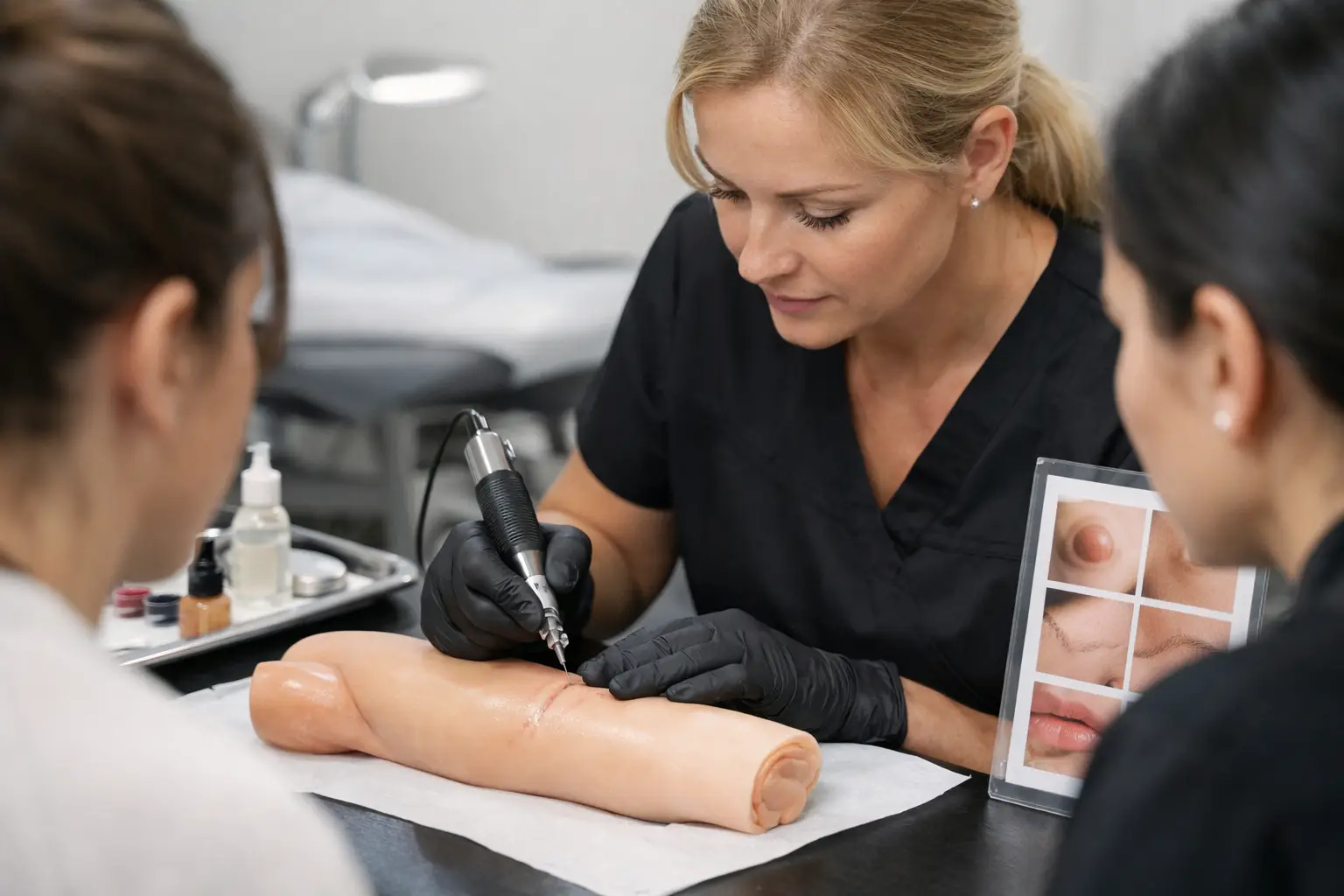
A scar is never simply a technical canvas. It may represent surgery, trauma, childbirth, illness or a long period of feeling uncomfortable in one’s own skin. That is why choosing a CPD paramedical tattoo course is about far more than learning to implant pigment. For practitioners, it is a decision to work in a specialist area where skin knowledge, consultation skill, colour precision and ethical judgement all directly affect a client’s confidence.
Paramedical tattooing can become a valuable premium service for established PMU artists, tattooists, SMP practitioners and aesthetics professionals. But it is not an add-on treatment to approach lightly. The right education must prepare you to assess whether a treatment is suitable, understand when it is not, and work with a level of care that respects both healed skin and the person attached to it.
Why paramedical tattoo training demands more
Unlike cosmetic tattooing on healthy, consistent skin, paramedical work often involves skin that has changed in texture, thickness, vascularity and pigment response. Scar tissue may be raised, indented, fibrous, shiny, unstable or unevenly coloured. Stretch marks can vary widely depending on their age, depth, location and the client’s natural skin tone. A technically attractive result begins with knowing what the skin can safely and realistically achieve.
A strong course should therefore teach treatment suitability before technique. That means recognising mature versus immature scars, identifying contraindications, understanding healing timelines and knowing when medical clearance or referral is appropriate. No responsible practitioner should promise that every scar can disappear. The aim is usually to reduce contrast, soften visual disruption and help the area blend more naturally with the surrounding skin.
This distinction matters commercially as well as ethically. Clear expectations protect the client experience and protect your professional reputation. Clients seeking scar camouflage or stretch mark camouflage are often deeply invested in the outcome. An honest consultation, supported by sound clinical awareness, is what turns specialist skill into trusted practice.
What a CPD paramedical tattoo course should cover
The most useful training combines theory with supervised practical application. Watching a demonstration can introduce a method; it cannot replace the judgement developed by working through colour choices, skin variables and needle control under experienced guidance.
Skin behaviour, healing and treatment suitability
Your training should explain the anatomy and function of the skin in a way that applies directly to treatment decisions. You need to understand how scar tissue forms, why some scars remain unsuitable for tattooing, how inflammation affects results and why a healed appearance does not always mean that the tissue is ready for treatment.
Suitability screening should cover relevant health conditions, medications, pregnancy and breastfeeding considerations, active skin conditions, keloid tendency, recent surgery and previous treatments. It should also address the difference between a cosmetic concern and a medical condition requiring assessment elsewhere. A practitioner’s confidence is demonstrated as much by the treatments they decline as those they perform.
Colour theory across real skin tones
Colour matching is one of the most demanding parts of paramedical tattooing. Skin is not one flat shade. It contains warmth, coolness, undertones, translucency and natural tonal variation that changes across different areas of the body. A pigment that appears accurate in a cup can heal too warm, too cool, too light or too opaque if the practitioner has not accounted for the client’s skin and scar characteristics.
Look for education that goes beyond a basic pigment chart. It should teach custom mixing, undertone assessment, healed-result planning, colour correction and the role of skin tone diversity in every consultation. This is particularly important when treating darker skin tones, where poor colour selection or unsuitable technique can create further contrast rather than camouflage it.
Scar and stretch mark camouflage methods
A course should make clear that scar camouflage and stretch mark camouflage are related but separate disciplines. Scar camouflage uses carefully selected pigment to reduce the colour difference between a stable scar and the surrounding skin. It requires controlled placement, thoughtful saturation and a realistic understanding of how altered tissue will retain colour.
Stretch mark work may involve camouflage tattooing, skin stimulation techniques such as MCA inkless needling, or a staged approach. The correct method depends on whether the marks are recent or established, pale or pigmented, shallow or textured. The goal may be improved blending, improved texture appearance or both. Training should help you decide which route is appropriate rather than treating every concern with one method.
Technique, machine control and safe practice
Technical modules should cover needle configurations, machine settings, depth control, stretch, movement and layering. On scar tissue, depth is not something to guess. Working too aggressively can cause unnecessary trauma; working too superficially may compromise pigment retention. There is a balance between achieving coverage and respecting the tissue.
Infection prevention, cross-contamination controls, patch testing, documentation, consent and aftercare must be central rather than treated as administrative extras. Paramedical clients need clear guidance on what normal healing looks like, what may affect retention and when to contact their practitioner. Good aftercare protects the result and supports a calm, informed client journey.
CPD certification versus regulated qualifications
CPD is a useful marker that training has been designed to support continuing professional development. It can help practitioners demonstrate that they have invested in relevant, structured education. However, CPD certification and regulated qualifications are not automatically the same thing.
Before enrolling, ask exactly what certificate you will receive, what assessment is required and whether the course is suitable for your current level and insurance requirements. A completion certificate based solely on attendance may be useful as an introduction, but it is not equivalent to being assessed competent in a practical treatment. If you want to build a serious paramedical service, seek training with meaningful assessment, clear case-study requirements and post-course support.
For many practitioners, the strongest route is to combine specialist CPD education with regulated training where appropriate. OFQUAL-regulated qualifications can offer an additional level of structure and external standards, while advanced CPD courses may provide focused techniques that are changing quickly within the industry. The right choice depends on your existing qualification, intended treatment menu, insurer and local authority requirements.
Questions to ask before you book
A polished course page is not evidence of depth. Ask who teaches the programme and whether they actively treat scar and stretch mark clients themselves. Ask how much hands-on practice is included, whether live models are used, how feedback is given and what happens if you need help with your first cases after training.
You should also ask whether the course covers adverse outcomes, realistic healed-result expectations and treatment refusal. These subjects may not be glamorous, but they reveal whether a provider understands the responsibility of this work. Training should show before-and-after results that reflect different skin tones, scar types and stages of healing, rather than presenting only ideal cases.
At Ink Illusions, paramedical education is shaped by hands-on clinical experience and techniques refined through Brazilian, American and UK approaches. That perspective matters because specialist treatment is never static. Practitioners need a framework for making informed decisions, not a rigid script that ignores the individual in front of them.
Building a credible service after training
Completing a course is the beginning of practice, not the finish line. Start with a focused treatment offering and be precise about what you provide. Rather than advertising a broad claim that you can treat every scar, build confidence through carefully selected cases, thorough consultations and well-documented healed results.
Photography should be consistent, consent-led and honest. Use the same lighting where possible, record treatment stages and avoid presenting immediate post-treatment redness as a healed outcome. Your portfolio should demonstrate your ability to create subtle, believable improvement, because that is what informed clients are looking for.
Pricing should reflect the time required for consultation, colour matching, treatment planning, procedure work, aftercare and possible review sessions. Paramedical tattooing is not a quick-service category. It carries a higher level of responsibility and should be positioned accordingly.
The right course gives you more than another certificate for your wall. It gives you the judgement to approach changed skin with respect, the technical control to pursue natural-looking results and the confidence to offer a service that can genuinely help someone feel more at home in their body.
