


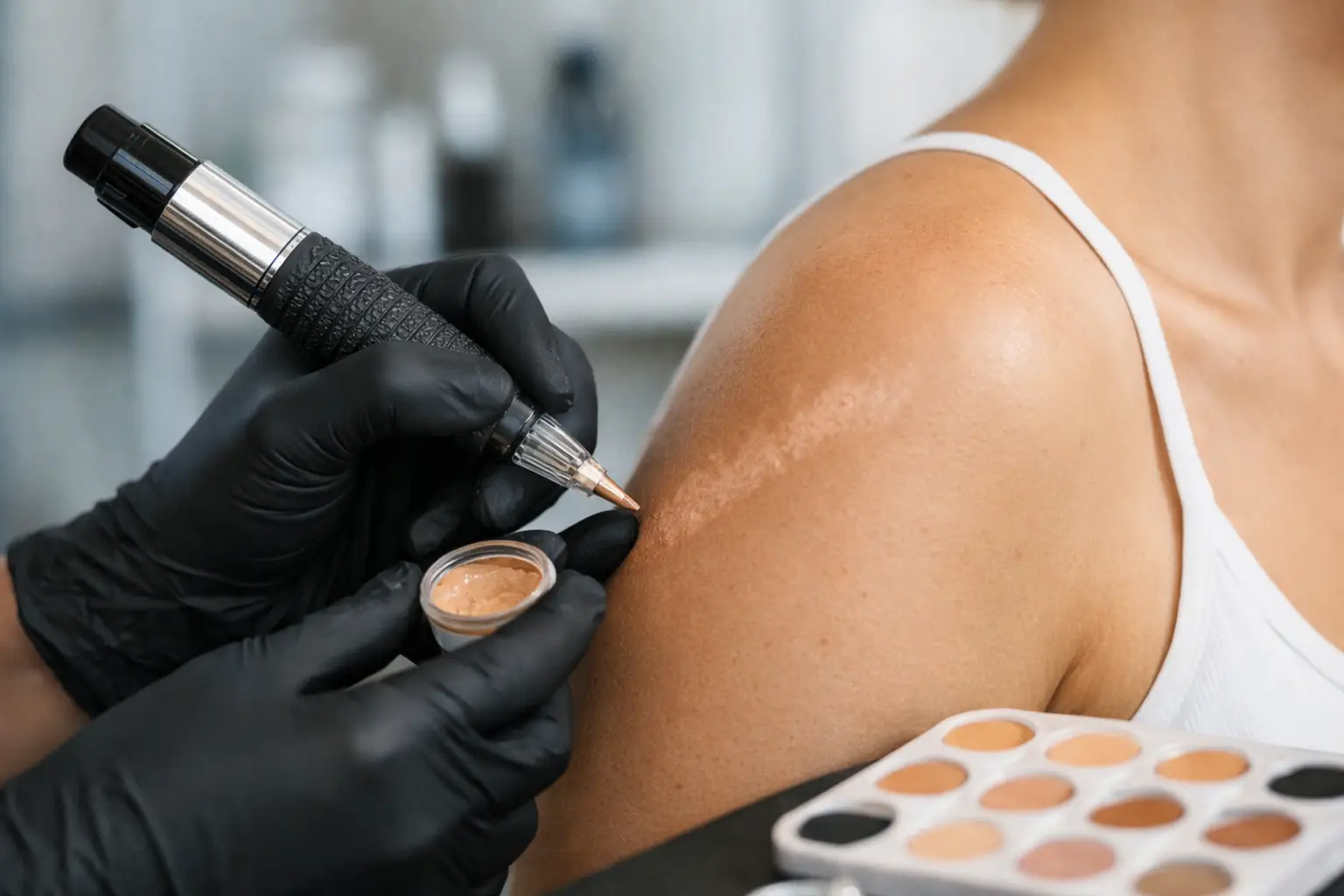
A scar can heal well medically and still feel impossible to ignore. The same is true of stretch marks, pigment loss and skin trauma that changes how evenly the skin reflects light. Skin camouflage tattooing is designed for that exact gap between healing and confidence – when the skin is stable, but its appearance still does not feel like your own.
This is not standard body tattooing and it is not a quick cosmetic fix. It is a specialist paramedical treatment that places custom-blended pigment into the skin to reduce the contrast between an area of concern and the surrounding skin tone. When performed well, the aim is not to make skin look airbrushed or perfect. It is to make the area less noticeable, more balanced and easier to live with day to day.
What skin camouflage tattooing actually does
At its core, skin camouflage tattooing works by restoring visual harmony. A scar, stretch mark or depigmented patch often stands out because it is lighter, darker, shinier or texturally different from the skin around it. Camouflage tattooing addresses the colour difference, not every aspect of the skin change.
That distinction matters. If a scar is raised, indented, fibrotic or highly reflective, pigment alone may not create the best result. In many cases, the skin benefits from preparation first, such as needling-based revision work or other advanced skin treatments to improve texture and receptivity before pigment is implanted. This is why specialist assessment is so important. Good practitioners do not simply ask whether they can tattoo it. They assess whether they should, and in what order treatment should happen.
Who is suitable for treatment
The best candidates usually have fully healed, stable skin with no active inflammation. This can include mature surgical scars, injury scars, burns, stretch marks, hypopigmentation and some cases of vitiligo or post-inflammatory pigment loss, depending on stability and medical history.
Timing is one of the biggest factors in outcomes. Fresh scars often continue changing for many months, sometimes longer, so treating too early can lead to poor colour retention or a result that no longer matches the skin once healing progresses. A specialist will usually want the area to be fully healed, settled in tone and no longer pink or actively remodelling.
Skin tone also needs an expert approach. Matching lighter complexions is not always simpler, and deeper skin tones should never be treated as an afterthought. True camouflage work depends on understanding undertones, healing behaviour, scar tissue variation and how pigment shifts over time. This is where specialist paramedical knowledge separates credible treatment from guesswork.
What the consultation should cover
A proper consultation is not a formality. It should establish whether the skin is suitable, what result is realistic and whether another treatment should come first.
The area should be assessed for age, texture, thickness, vascularity, sensitivity and how it responds under light. Medical history matters too, particularly where there is a history of keloid scarring, autoimmune skin conditions, poor wound healing or ongoing medication that may affect the skin. If a practitioner promises a perfect colour match in one session without discussing limitations, that is a warning sign.
Photography and patch testing may form part of the process. So should a clear discussion around maintenance. Camouflage tattooing can look highly natural, but it is still a tattoo-based treatment. Skin changes, sun exposure affects contrast, and some areas may need additional sessions to refine the result.
How the treatment process works
Once the area is deemed suitable, the practitioner blends pigment to sit as closely as possible with the surrounding skin. This is highly technical. Matching skin is not just about choosing beige, brown or olive. It involves reading warmth, coolness, saturation and translucency, then accounting for how the pigment will heal in scarred or altered skin.
During treatment, pigment is implanted into the area in controlled passes. The approach varies depending on the concern being treated. Stretch marks, for example, behave differently from a smooth surgical scar. Some areas accept colour evenly, while others heal in a patchier way and need building gradually over multiple appointments.
Results are not judged on the treatment bed. Fresh pigment can appear brighter or more obvious immediately after the procedure. Once healed, the colour softens and integrates more naturally. Most clients need at least two sessions, sometimes more, because refinement is part of responsible treatment rather than a sign something has gone wrong.
Skin camouflage tattooing for scars and stretch marks
This is where specialist technique matters most. Scars and stretch marks are not blank canvases. They are altered skin structures with different density, elasticity and pigment behaviour. A practitioner with broad tattooing experience is not automatically qualified to treat them well.
With scars, the challenge is often a combination of colour loss and texture disruption. If the surface is uneven or glossy, pigment may reduce the colour contrast but still leave the area visible at certain angles. With stretch marks, especially lighter mature stretch marks, the issue is often the way they catch the light differently from surrounding skin. Camouflage can reduce visibility significantly, but the result depends on both tone matching and skin preparation.
This is why advanced clinics often combine techniques rather than relying on one method for every case. In specialist practice, Brazilian, American and UK approaches have all influenced how scar and stretch mark restoration is now delivered at a much higher standard than the market offered a few years ago.
What results look like in real life
The best result is usually the one that does not announce itself. Clothes become easier to wear. Bright bathroom lighting becomes less of an event. A scar that once drew the eye first no longer dominates the way someone sees themselves.
That said, realistic expectations are essential. Camouflage tattooing improves visibility. It does not erase skin history. In some clients, the area becomes dramatically less noticeable. In others, the improvement is moderate but still meaningful because the skin looks more even from conversational distance or in everyday movement.
Healing response, scar maturity, lifestyle, sun exposure and aftercare all affect the final appearance. There is no ethical way to promise identical outcomes across every skin type and concern.
Choosing a specialist practitioner
This field has grown quickly, and not all providers work to the same standard. The safest choice is a practitioner or clinic with clear expertise in paramedical tattooing rather than general beauty treatments alone. You should expect to see evidence of healed results, not only fresh treatment photos, and experience across different skin tones and concern types.
Training background matters as well. Scar and stretch mark camouflage require more than machine control. They require an understanding of skin trauma, pigment theory, contraindications, treatment sequencing and complication awareness. Clinics and academies that help shape standards in the sector tend to approach both treatment and training with greater precision.
For clients seeking this level of care, and for practitioners wanting to move into advanced restorative work, specialist providers such as Ink Illusions have helped raise expectations around what competent camouflage treatment should look like in the UK.
Aftercare and long-term considerations
Aftercare is part of the result, not an afterthought. The treated skin needs to heal cleanly and without unnecessary irritation. Clients are usually advised to keep the area protected, avoid friction and follow the practitioner’s aftercare protocol closely.
Long term, sun exposure is one of the main factors that can affect how closely the treated area continues to blend. Tanned surrounding skin may increase contrast if the camouflaged area responds differently to UV exposure. Some clients choose periodic top-up work, while others are happy with the improvement achieved after their initial treatment course.
It is also worth recognising that not every concern should be camouflaged immediately. Some skin responds better when revision, needling or resurfacing work is done first. A strong treatment plan is built around the skin in front of the practitioner, not around a one-size-fits-all service menu.
For the right client, skin camouflage tattooing can be far more than cosmetic. It can be the final stage in making healed skin feel socially invisible again, which is often what people wanted all along.