


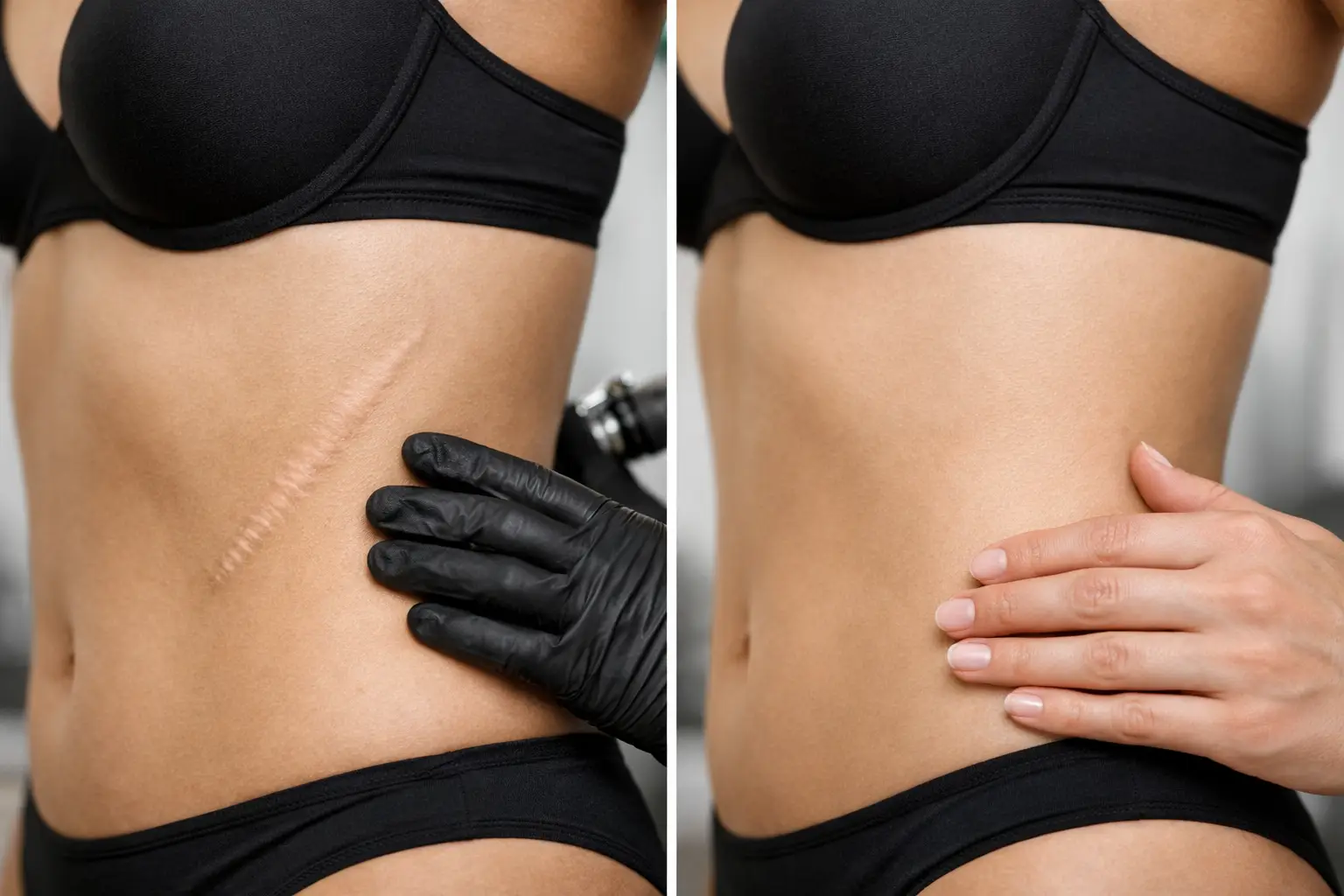
A scar rarely looks the same in real life as it does in a photo. Light catches texture, redness can come and go, and pale areas often stand out more when surrounding skin tans. That is why scar camouflage tattoo before and after results matter so much – they show not just coverage, but how carefully matched pigment can reduce contrast and make a scar far less noticeable in everyday life.
For many clients, the goal is not perfection. It is normality. They want the scar to stop drawing the eye, whether it sits on the abdomen after surgery, across the chest, on the legs, or in an area affected by burns, trauma, or self-harm. A well-executed camouflage treatment can help restore visual balance in the skin, but the quality of the result depends on far more than simply implanting pigment.
What scar camouflage tattoo before and after really shows
Before-and-after images can be powerful, but they only tell the truth when you know what you are looking at. The most important change is usually not that the scar has disappeared. It is that the difference between scar tissue and surrounding skin has been softened.
In the before stage, the scar may appear lighter, pinker, or more uneven in tone than the surrounding area. It may also reflect light differently because scar tissue often has a different surface quality. In the after stage, the strongest results show better integration with the client’s natural skin tone, so the eye no longer lands on the scar first.
That said, not all before-and-after transformations are immediate. Freshly treated skin can look darker, warmer, or slightly red after the appointment. The healed result is what matters. Pigment settles over several weeks, and the final appearance may need refinement in a second session to improve accuracy and longevity.
This is where specialist work stands apart from general tattooing. Scar tissue behaves differently from healthy skin. It can be less predictable, less receptive, and more delicate. Treatment planning has to account for maturity of the scar, tone variation, skin undertones, and the possibility that one section may retain pigment differently from another.
Who is suitable for scar camouflage tattooing?
The best scar camouflage tattoo before and after outcomes usually begin with proper eligibility. Not every scar should be tattooed, and not every client is ready for treatment straight away.
In most cases, the scar should be fully healed, stable, and mature. That often means waiting at least 12 months, though timing can vary depending on the type of injury, surgery, or repair process. A mature scar is typically flatter, less vascular, and no longer actively changing. If the tissue is still pink, raised, itchy, or sensitive, camouflage may need to wait.
Suitability also depends on the scar type. White or hypopigmented scars often respond well when the main concern is lack of colour. Very raised keloid scars are a different matter and are not usually suitable for standard camouflage tattooing. Some scars also need preparatory work before pigment implantation, especially if texture is significant. In those cases, skin revision techniques such as needling-based treatments may help improve the canvas first.
Skin tone matters too, but not in the way many people assume. A skilled practitioner should be able to work across a wide range of complexions. The challenge is not whether darker or lighter skin can be treated, but whether the pigment formulation, undertone correction, and healing strategy are appropriate for that individual.
Why some results look better than others
When people compare scar camouflage tattoo before and after images, they often focus only on colour match. In reality, several factors shape the finished result.
The first is scar maturity. Older, stable scars tend to offer more predictable healed outcomes than those still in an active healing phase. The second is tissue quality. If the area is fibrous, shiny, indented, or uneven, pigment may sit inconsistently and reflect light differently, even when the colour match is technically strong.
The third is practitioner skill. Skin tone restoration is highly technical work. It requires custom pigment selection, precise machine control, and a strong understanding of how scar tissue heals. An exact match on the day does not guarantee an exact healed result, which is why experience is critical.
Aftercare also plays a major role. Poor healing, friction, premature sun exposure, or picking at the area can affect retention. Even with excellent treatment, the body heals in its own way. Some clients retain pigment evenly after one session, while others need layering and adjustment.
The treatment process behind the after photo
A polished after image is usually the result of a careful process rather than a single quick fix. Consultation comes first. This should include scar assessment, discussion of medical history, evaluation of skin tone, and honest expectation setting.
Next comes colour analysis. This is one of the most specialised parts of the procedure. Human skin is not one flat shade. It contains undertones, warmth, coolness, translucency, and natural variation across the body. Camouflage pigments must be selected and often blended with precision.
During the procedure, pigment is implanted into the scar tissue to visually reduce contrast. The approach used will vary depending on the area, the scar’s condition, and the practitioner’s method. Some cases may benefit from combining camouflage with broader scar revision strategies over time.
Healing follows in stages. Initially, the area may appear more noticeable due to redness or excess warmth in the pigment. As healing progresses, this settles. A review appointment allows the practitioner to assess retention and decide whether a further session is needed to refine the result.
Expectations: improvement, not invisibility
This is where ethical scar work matters. Strong before-and-after photography can raise expectations, but the most responsible practitioners will explain that scar camouflage is an improvement treatment, not an eraser.
A scar may still be visible at close range. If there is texture, indentation, or raised tissue, tattooing will not remove that physical difference. It can reduce colour contrast, which often makes the scar much less obvious from normal viewing distance. For many clients, that is the difference between feeling self-conscious every day and forgetting the area is there.
Some results are subtle and some are dramatic. A flat white scar against medium or deep skin can often show a striking visual change when colour is restored well. A heavily textured or uneven scar may show a more moderate result. Both can still be successful if the treatment goal has been met.
What to look for in genuine before-and-after results
Good photography should show consistency in lighting, angle, and skin position. If the before photo is taken in harsh light and the after photo in soft light, the comparison is less useful. Healed results are more valuable than fresh treatment images because they show how the pigment has actually settled.
It is also worth looking for variety. A credible specialist should be able to show work on different scar types, body areas, and skin tones. One or two excellent images are not enough to judge true expertise in paramedical tattooing.
If you are choosing a clinic, ask whether the images are fully healed, how many sessions were required, and whether any preparatory scar revision work was carried out first. Those details say far more than a dramatic photo alone.
Is scar camouflage right for everyone?
Not always. Some clients are better suited to scar revision first, especially where texture is the main issue. Others may not be good candidates due to skin conditions, scar instability, or unrealistic expectations. There are also cases where laser, needling, or combined methods may be the better route before any pigment is considered.
This is why specialist assessment matters. A practitioner working at an advanced level should be prepared to say no, or not yet, if the skin is not ready. That is not a limitation of the treatment. It is part of protecting the result.
At Ink Illusions, this area of work sits firmly within advanced paramedical practice rather than general cosmetic tattooing. The difference shows in consultation standards, treatment planning, pigment strategy, and the ability to work with complex scars in a controlled, realistic way.
Scar camouflage can be life-changing, but the most meaningful after photo is not the one that looks dramatic on a screen. It is the one that lets someone get dressed, go on holiday, or catch their reflection without the scar being the first thing they see.