


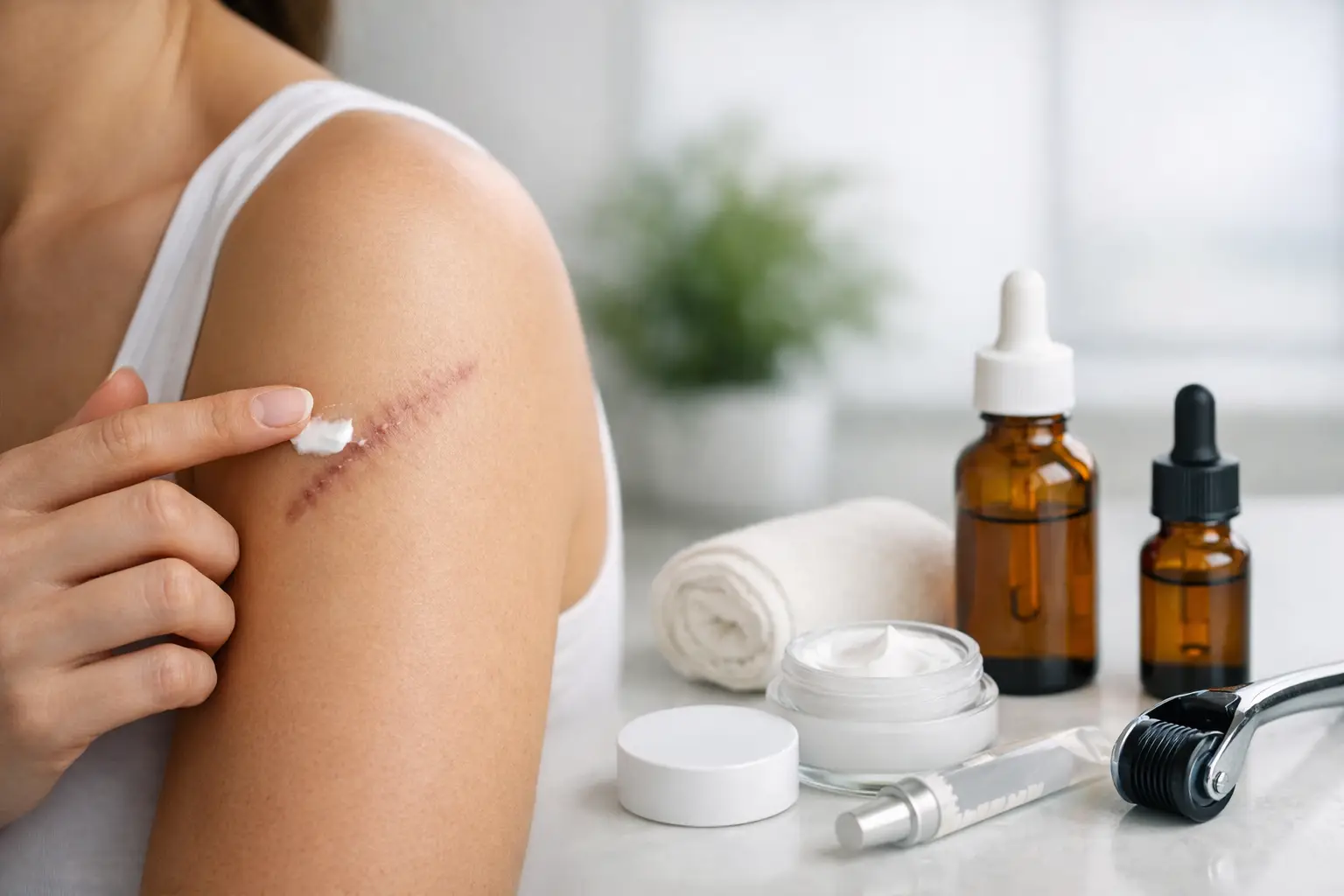
A scar does not need to be painful to affect how you feel in your skin. It may pull when you move, catch the light differently, sit raised against the surrounding tissue or remain a colour you are tired of seeing. This scar healing treatment guide explains what can realistically improve a scar, why timing matters, and how specialist skin restoration treatments are selected.
The aim is not to promise that every scar can disappear. Scar tissue is permanent tissue, and every healing response is individual. The right approach can, however, soften texture, reduce contrast, improve mobility in suitable cases and make a scar far less noticeable in day-to-day life.
Start with the scar, not the treatment
Scars form when the deeper layers of skin have been injured, whether through surgery, trauma, burns, acne, self-harm, illness or an invasive procedure. They do not all behave in the same way. A treatment plan that works well for a pale, flat surgical scar may be unsuitable for a raised scar, an active keloid or a scar that is still red and changing.
A specialist assessment looks beyond the location alone. The key considerations are the scar’s age, colour, depth, thickness, mobility, sensitivity and stability, alongside your skin tone and medical history. This is particularly important for clients with richly melanated skin, where inflammation or poorly selected treatment settings can increase the risk of post-inflammatory hyperpigmentation or hypopigmentation.
A mature scar is usually stable in colour and texture, no longer actively healing, and free from scabbing, inflammation or infection. Many scars need at least 12 months before camouflage tattooing is considered, although surgical advice and individual healing should always take priority. A scar may be ready for one treatment while still unsuitable for another.
Flat scars, indented scars and raised scars
Flat scars can retain a white, pink, red, brown or purple appearance long after the wound has closed. Where texture is stable, treatment may focus on improving colour contrast or encouraging further skin renewal.
Indented scars, including some acne scars and surgical scars, may need a plan that targets texture first. Adding pigment to an uneven surface too soon can draw attention to the very feature you want to minimise. Collagen-stimulating treatments may help improve the quality of the tissue before any colour-matching work is considered.
Raised hypertrophic scars and keloid scars require greater caution. A hypertrophic scar stays within the original wound boundary, while a keloid can grow beyond it. Neither should be treated as a routine cosmetic concern. If a scar is raised, itchy, growing, painful or repeatedly inflamed, medical assessment is essential before any skin needling or tattoo-based procedure.
The scar healing treatment guide: choosing the right route
There is no single best scar treatment. Results depend on what is causing the scar to stand out: colour, texture, tightness, depth or a combination of these. A properly sequenced plan often delivers more natural results than relying on one technique alone.
Medical and clinical scar management
For new, symptomatic, raised or problematic scars, your GP, consultant dermatologist or surgeon may recommend medical management. Options can include silicone-based products, pressure therapy, steroid treatment, vascular laser, prescription topical treatments or scar revision surgery. These interventions address scar activity and should come before aesthetic camouflage where appropriate.
Seek clinical advice promptly if a scar becomes hot, swollen, painful, starts weeping, opens, changes quickly or affects movement. Aesthetic treatment is not a substitute for medical care, and an ethical practitioner will postpone treatment where healing is incomplete or the skin is not stable.
Microneedling and MCA inkless needling
Microneedling creates controlled microchannels in the skin to encourage a wound-healing response and collagen remodelling. In scar work, it can be useful for selected flat or indented scars where the goal is to improve texture and tissue quality over a course of treatments.
MCA inkless needling is a specialist paramedical approach that combines precise needling with carefully selected topical serums. It is often used for scar and stretch mark revision where pigment is not the first priority. The treatment can support a smoother-looking surface and help reduce the visual difference between scar tissue and surrounding skin.
Results develop gradually because collagen remodelling takes time. Treatments are usually spaced apart, and the number required depends on the scar’s age, location and response. More aggressive is not automatically better: overly frequent or poorly performed needling can create unnecessary inflammation and compromise results.
Radiofrequency microneedling
Radiofrequency microneedling combines needles with controlled heat delivered within the skin. It is a more advanced option for suitable scars where texture, laxity or deeper tissue remodelling is a key concern. The energy component can support collagen stimulation at a depth that topical treatments cannot reach.
This does not make it right for everyone. Treatment settings, skin tone, scar type and healing history need careful consideration. For clients prone to pigmentation changes, conservative protocols and experienced assessment are particularly valuable.
Scar camouflage tattooing
Scar camouflage tattooing, also called skin tone restoration or paramedical tattooing, uses custom-mixed pigment to reduce the contrast between a stable scar and the surrounding skin. It does not erase a scar or change its physical structure. Its strength is optical: when colour contrast is reduced, the scar can become far less visible from a normal viewing distance.
Successful camouflage depends on technical colour theory, skin undertones, pigment behaviour and scar tissue knowledge. A pigment that appears correct in the treatment room can heal differently in scar tissue, which is why patch testing, cautious layering and realistic expectations matter. The best result is rarely an exact block of colour. It is a soft, believable blend that works with the client’s natural skin rather than against it.
Camouflage is generally reserved for scars that are fully healed, flat or close to flat, stable and free from active redness. It may be particularly effective for pale surgical scars, burns that have settled, some self-harm scars, cleft lip scars, body scars and stretch marks. It is less suitable for active keloids, unstable scar tissue or heavily textured scars that need revision first.
Chemical peels and pigmentation support
When discolouration around a scar is part of the concern, carefully chosen professional peels and pigmentation treatments may support a more even appearance. These are not interchangeable with scar revision. The wrong peel on compromised tissue can irritate the area or worsen pigment changes, so treatment must be based on skin condition rather than a generic protocol.
Home skincare also has a role, but it should be proportionate. Daily broad-spectrum SPF is one of the most useful foundations for preventing scars from becoming darker or more noticeable. Keep the area moisturised if advised, avoid picking and protect it from unnecessary friction. Strong acids, retinoids and exfoliants should not be applied to recently treated skin unless specifically recommended.
What to expect from a specialist consultation
A credible consultation should feel precise, not rushed. Your practitioner should ask how the scar occurred, how long it has been present, whether it has changed, what treatments you have tried and whether you have a history of keloids, poor wound healing, diabetes, autoimmune conditions, allergies or medication that affects healing.
They should examine the scar under good lighting, discuss whether a patch test is appropriate and explain what improvement is achievable. Before-and-after images are useful when they show healed outcomes on scars similar to yours, not just immediate post-treatment redness or flattering lighting.
Ask about the practitioner’s scar-specific training, their experience across different skin tones, infection-control standards and aftercare process. Paramedical tattooing and advanced scar revision are specialist disciplines. The skin may look calm on the surface, but scar tissue can be unpredictable beneath it.
Aftercare protects the investment
Aftercare is part of the treatment, not an optional extra. Follow the individual instructions you are given, particularly around keeping the area clean, avoiding swimming, saunas, excessive sweating, sun exposure and friction while the skin recovers. Do not pick flakes, scabs or dry skin.
For camouflage tattooing, healed pigment should be assessed after the skin has fully settled rather than judged in the first few days. For needling-based treatments, temporary redness and sensitivity can occur, but persistent pain, spreading redness, discharge or significant swelling needs prompt medical advice.
Ink Illusions approaches scar revision as a structured restoration process, combining advanced skin treatments with specialist camouflage techniques when the scar and the client are genuinely ready. The right treatment is not the most dramatic one. It is the one that respects the scar’s biology, protects the surrounding skin and moves you closer to feeling comfortable in it again.