


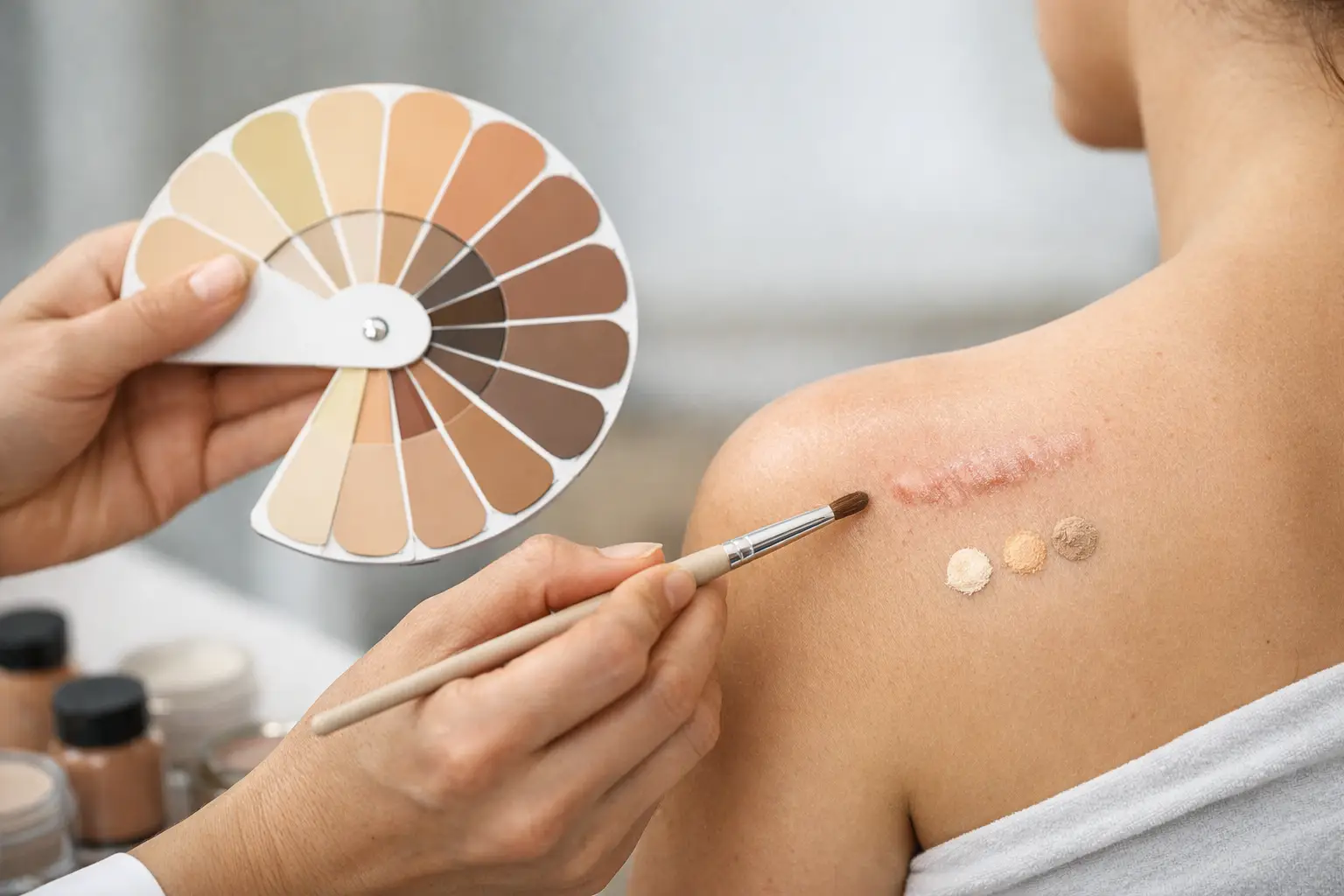
A scar can be flat, stable and medically healed yet still draw the eye because its colour does not sit comfortably with the surrounding skin. That is where colour matching for scar camouflage becomes far more than selecting a beige pigment. It is a specialist process of reading undertones, understanding scar tissue and anticipating how pigment will settle once the skin has healed.
The aim is not to make a scar disappear or create a perfect block of colour. It is to reduce contrast, soften the visual boundary and help the area look less noticeable in normal day-to-day light. When this is approached with the right assessment, pigment selection and layering technique, the result can make a meaningful difference to how a person feels in their skin.
Why scar colour is rarely one simple shade
Natural skin is not one flat colour. It contains warmth, coolness, depth, translucency and subtle shifts between different areas of the body. The skin on the chest may carry a different tone from the abdomen, thigh, face or arm. Sun exposure, circulation, hormones, ethnicity and existing pigmentation all influence what the eye perceives as a person’s natural skin tone.
Scar tissue adds another level of complexity. It may appear white, pink, red, purple, brown, grey or darker than the surrounding skin. Some scars are hypo-pigmented, meaning they have lost colour, while others are hyper-pigmented and carry excess darkness. A scar can also contain several colours at once, particularly after surgery, burns, trauma or long-term healing.
This is why a pigment that looks correct in the bottle, or even immediately after implantation, may not be the correct final choice. Professional scar camouflage requires a custom blend that accounts for both the client’s skin and the scar’s individual behaviour.
Colour matching for scar camouflage starts with skin assessment
The most successful treatments begin before a needle touches the skin. A specialist consultation should assess whether the scar is suitable for cosmetic tattooing, as well as identify the most appropriate colour direction.
A scar generally needs to be fully healed, stable and free from active inflammation. In many cases, this means waiting at least 12 months after surgery or injury, although healing times vary. Raised, itchy, painful, changing or unstable scars need further consideration. Camouflage tattooing is not a treatment for active keloid scarring, and no responsible practitioner should work over a scar that has not settled properly.
The practitioner then examines the surrounding skin in natural light and considers its surface tone and underlying undertone. Surface tone may appear light, medium or deep, but undertone is what gives skin its character. It may lean warm, golden, peach, olive, neutral, cool, red or blue. A match that ignores undertone can look too yellow, too pink, ashy or grey once healed.
Skin texture matters as much as colour. Scar tissue may be thinner, denser, smoother or less even than healthy skin. It may retain pigment differently and can heal unpredictably. Colour camouflage can improve the appearance of contrast, but it cannot remove indentation, thickness or textural change. Where texture is a primary concern, treatments such as medical corrective needling, radiofrequency microneedling or other skin-repair approaches may be discussed before pigmentation.
The role of undertones, opacity and pigment temperature
A pigment blend is built in layers of decision-making. The first question is not simply, “What colour is the skin?” It is, “What is missing from the scar, and what will make it sit more naturally beside the skin?”
For a pale or white scar, the focus is often on replacing lost warmth and depth without making the area appear opaque. Too much white or a pigment that is too cool can leave a healed result looking chalky. Too much warmth can cause the area to pull orange or peach against the surrounding skin.
For darker scars, the approach is different. Attempting to cover hyper-pigmentation with an overly light pigment may create a patchy or grey result, particularly as the skin heals and pigment settles. In some cases, colour correction, skin rejuvenation or a staged treatment plan may be more appropriate than immediate camouflage.
Pigment opacity also has to be controlled. Highly opaque pigment can cover contrast quickly but may look artificial if it does not reflect the natural translucency of skin. More transparent blends can produce a softer result, though they may require additional sessions. The right choice depends on scar type, skin tone, placement and the client’s realistic goals.
Why healed results matter more than fresh results
Freshly treated skin can be misleading. Immediately after scar camouflage tattooing, the area may look warmer, darker or more even than it will later. There can be temporary redness, swelling and surface changes that alter the apparent colour. A practitioner should never judge the final match while the skin is still fresh.
As the area heals, pigment settles within the skin and the true tone gradually becomes clearer. Scar tissue can hold colour differently from normal skin, which is why a cautious first session is often the most professional approach. It allows the practitioner to observe retention and adjust the formula at a later appointment if needed.
This staged method is particularly valuable for clients with deeper skin tones, complex undertones, mature scars or areas exposed to frequent friction and sunlight. It is not a sign of poor planning. It is a recognition that advanced paramedical work must respect biology as well as artistry.
Light changes everything
A colour match should be considered in more than one lighting condition. The shade that appears ideal under bright clinic lighting may look different near a window, in a changing room, outdoors or under warm evening lighting. Natural daylight remains one of the most useful references, but it should not be the only reference.
Body position can affect perception too. Skin stretches and folds differently across the abdomen, breast, hip, shoulder and knee. A scar may look more noticeable when the body moves, when the skin is tanned or when it is dry. Good camouflage work considers the wider area rather than matching only the centre of the scar.
Clients should also understand that tanning can change the contrast. Camouflaged skin does not tan in exactly the same way as untreated skin, particularly where the scar itself lacks normal melanocyte activity. Consistent sun protection helps preserve a more even appearance and protects the integrity of the result.
What a realistic result looks like
The strongest outcomes tend to look understated. Rather than a visible patch of uniform pigment, a well-matched scar should blend more quietly into the surrounding area. Up close, texture may still be present. In certain lighting or at certain angles, the scar may still be visible. The difference is that it is no longer the first thing the eye notices.
This distinction matters when setting expectations. Scar camouflage is a confidence-restoring treatment, not a promise of flawless skin. It can be life-changing for a surgical scar, burn scar, self-harm scar, stretch mark or area of pigment loss, but results depend on the scar’s age, colour, texture, location and response to pigment.
A detailed consultation should include discussion of likely sessions, healing intervals, aftercare and whether a test patch is advisable. For clients with a history of allergies, complex medical conditions, recent medication changes or uncertain scar behaviour, careful screening is essential.
Specialist knowledge makes the difference
Colour work on scar tissue requires more than conventional cosmetic tattoo experience. Practitioners need a working knowledge of pigment correction, scar physiology, skin tone diversity, implantation depth and healed-result assessment. They must also know when not to treat, when to refer, and when a combination approach will provide a better outcome.
At Ink Illusions, the approach to scar and stretch mark camouflage is informed by specialist paramedical practice and techniques refined across Brazilian, UK and US treatment methods. That depth of training matters because every scar presents a different technical challenge, and every client deserves an approach designed around their own skin rather than a generic colour chart.
For practitioners entering this field, colour theory should be taught through real healed examples, not only on artificial skins or fresh procedure photographs. Understanding how a formula changes over time is what turns pigment selection into dependable scar camouflage work.
The best colour match is not the one that looks most dramatic on treatment day. It is the one that heals softly, respects the skin’s natural variation and allows the person wearing it to think less about their scar and more about living comfortably in their own body.