


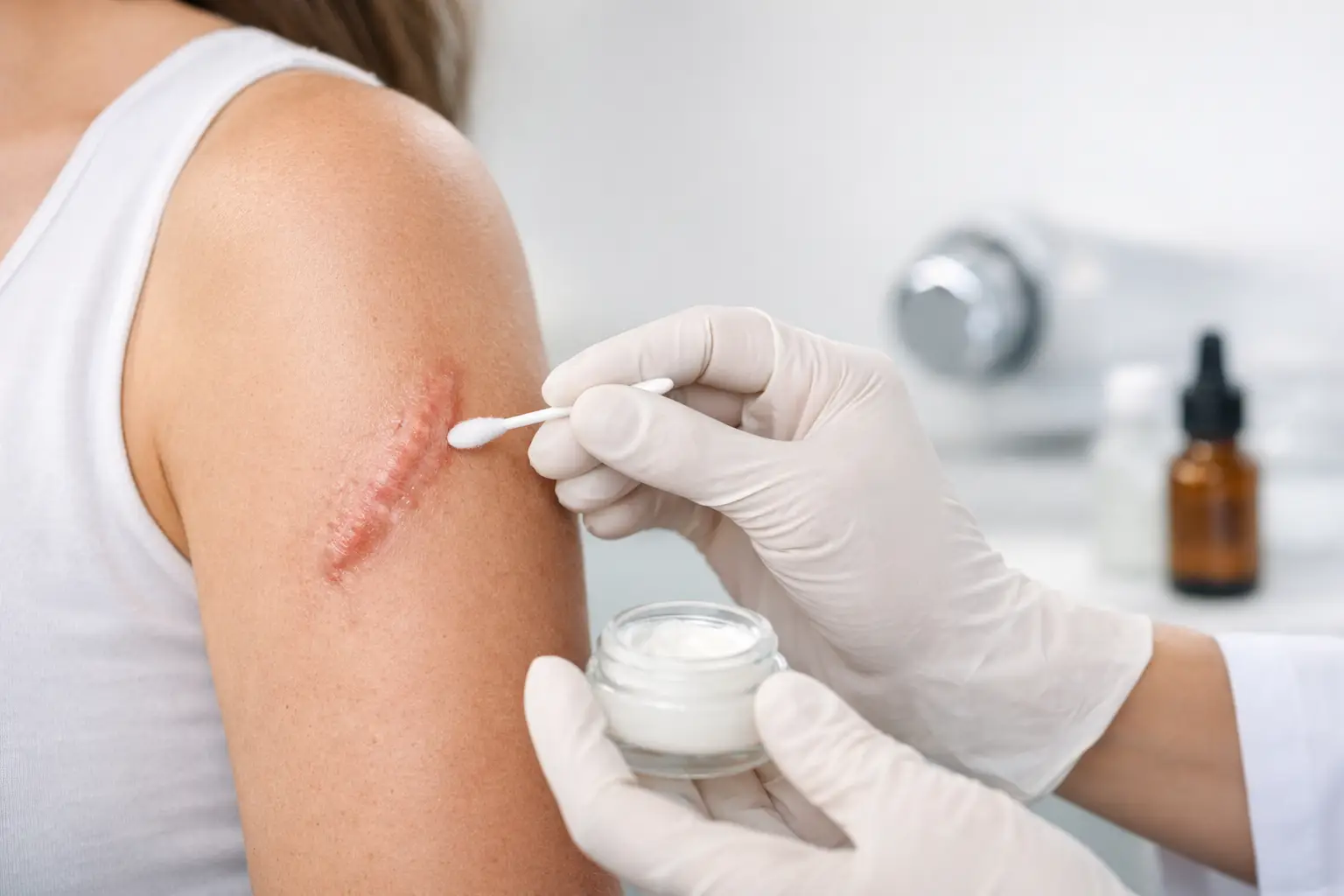
A scar that remains red, firm and raised long after the original wound has closed can feel like a permanent reminder of surgery, trauma, acne or a burn. To treat hypertrophic scars well, the first priority is not to rush into a cosmetic procedure. It is to understand how the scar is behaving, whether it is still active, and which treatment can improve its texture, colour and visibility without triggering further irritation.
Hypertrophic scarring is highly individual. One person may have a fine surgical line that is slightly elevated, while another may experience a tight, itchy, uneven scar that affects movement and confidence. A specialist assessment creates the safest route forward, particularly when the area is visible or when the client has a history of difficult healing.
What makes a hypertrophic scar different?
A hypertrophic scar is a raised scar caused by the body producing excess collagen during healing. Unlike a keloid scar, it usually stays within the boundary of the original wound. It may be pink, red, purple or darker than the surrounding skin, depending on skin tone and the stage of healing. It can also feel hard, tight, tender or itchy.
These scars can follow caesarean sections, breast surgery, joint replacement procedures, injuries, burns, piercings, acne and other skin trauma. Friction, infection, tension on the wound, delayed healing and genetic predisposition can all influence how a scar develops.
The distinction between hypertrophic and keloid scarring matters. Keloids can grow beyond the original wound and may require medical management before any cosmetic scar work is considered. A practitioner should never treat every raised scar as though it has the same risk profile.
When should you treat hypertrophic scars?
Timing has a direct impact on outcomes. A newly healed scar may still be changing rapidly, and invasive treatments introduced too early can increase inflammation. In many cases, a scar needs time to mature before advanced scar revision or camouflage is appropriate. This can take many months and sometimes longer.
A mature scar is usually flatter, paler and more stable in appearance. That does not mean it has to be completely white or invisible before treatment begins. It means the tissue should no longer be actively thickening, spreading, breaking down or showing signs of infection.
Seek medical advice promptly if a scar is becoming increasingly painful, hot, swollen, ulcerated or rapidly raised. The same applies if it extends beyond the original wound edges. These signs need medical assessment rather than cosmetic correction.
The right treatment depends on the scar’s priority
There is no single procedure that suits every hypertrophic scar. A good plan addresses the main concern: height, firmness, redness, restricted movement, uneven pigment or a combination of these. Often, staged treatment produces better results than trying to solve every issue in one appointment.
Medical options for active, raised scarring
When a hypertrophic scar remains thick, itchy or inflamed, medical intervention may be the correct first step. A GP, dermatologist or plastic surgeon may recommend silicone gel or silicone sheets, pressure therapy, steroid injections, vascular laser treatment, cryotherapy or other prescription-led options. These treatments aim to reduce collagen activity, redness or discomfort.
Steroid injections can help flatten selected scars, but they are not suitable for every case and may carry risks such as thinning of the skin or pigment changes. Laser treatment can be valuable for redness and vascular activity, although the correct laser, settings and aftercare are especially relevant for deeper skin tones. Medical treatment should be led by a suitably qualified clinician who can assess contraindications and manage complications.
Scar revision for texture and pliability
Once a scar is stable, scar-focused treatments can support a smoother, more flexible surface. Microneedling and radiofrequency microneedling create controlled micro-injuries intended to stimulate remodelling within the skin. In the right hands and at the right stage, they may help improve uneven texture, tightness and the transition between scar tissue and surrounding skin.
Treatment intensity matters. Raised scar tissue is not an invitation to use increasingly aggressive settings. Overworking a scar can create prolonged inflammation and potentially worsen the concern. A specialist will consider scar age, location, depth, sensitivity, skin tone, previous treatments and the client’s healing history before selecting a technique.
Inkless needling approaches, including MCA-style scar revision, may also be considered for suitable mature scars. These methods are designed to support skin regeneration without placing pigment into the area. They are not a quick fix, and a series of carefully spaced sessions may be recommended according to the tissue response.
Camouflage tattooing for colour contrast
Scar camouflage tattooing does not remove scar tissue or flatten a raised scar. Its purpose is different: it reduces the contrast between stable scar tissue and the surrounding skin by implanting carefully matched pigment. For clients whose primary concern is a pale surgical line, loss of pigment or uneven colour, this can be transformative.
Camouflage must only be considered once the scar is mature and flat enough for pigment work. Pigment placed into an unstable, red or heavily raised scar may heal unpredictably. It may also draw attention to texture rather than soften it.
Skin tone matching is a technical process, not a standard shade selection. The skin’s undertone, surface tone, warmth, surrounding pigment changes and the expected healed result all affect the formulation. Experienced paramedical tattoo practitioners build colour gradually and review how the skin retains pigment between sessions. The objective is a natural reduction in contrast, not a block of opaque colour.
A realistic treatment plan is usually staged
The most effective pathway may involve medical scar management first, followed by texture revision, then camouflage once the tissue is ready. For example, a raised red surgical scar may need clinical treatment to settle the activity, needling to improve pliability and texture, and only then colour correction if a visible pale line remains.
This takes patience, but it protects the skin and gives each stage time to reveal what still needs attention. Before-and-after images can be helpful when they show healed, comparable results, yet no ethical practitioner should promise that every scar will respond in the same way. Scar biology, skin tone, age of the scar, location and aftercare all influence the outcome.
A proper consultation should include a review of medications, allergies, healing history, skin conditions, previous scar treatments and any tendency towards keloid scarring. It should also cover realistic expectations, likely downtime, treatment intervals and the possibility that referral to a medical professional is more appropriate.
Aftercare protects the progress you make
Aftercare is part of the treatment, not an afterthought. Follow the practitioner’s advice precisely, particularly regarding cleansing, sun exposure, exercise, swimming, skincare actives and friction from clothing. Freshly treated scar tissue needs protection from irritation and ultraviolet exposure, which can deepen pigmentation changes and prolong redness.
Avoid picking, exfoliating or applying unapproved products to the area. If you experience worsening pain, spreading redness, heat, discharge or an unexpected reaction, contact the treating professional or seek medical support without delay.
Long-term care can include keeping the area moisturised where advised, using sun protection and monitoring any changes. Scars continue to evolve, and a review appointment can help determine whether further revision or camouflage would be useful.
Choosing a specialist for hypertrophic scar treatment
The quality of the assessment matters as much as the procedure itself. Look for a practitioner who understands the difference between active and mature scarring, works across a broad range of skin tones, knows when to refer, and can explain why a treatment is or is not suitable. In paramedical tattooing, technical pigment knowledge and an understanding of scar physiology must work together.
Ask to see healed work rather than only immediate post-treatment photographs. Discuss the limits of treatment openly. A trustworthy specialist will tell you if the scar needs more time, medical input or a different approach before camouflage becomes appropriate.
A hypertrophic scar may not disappear completely, but it can often become less dominant in the way it looks and feels. The right plan respects the healing process, treats the tissue conservatively and focuses on the result that matters most: helping you feel more comfortable in your own skin.