


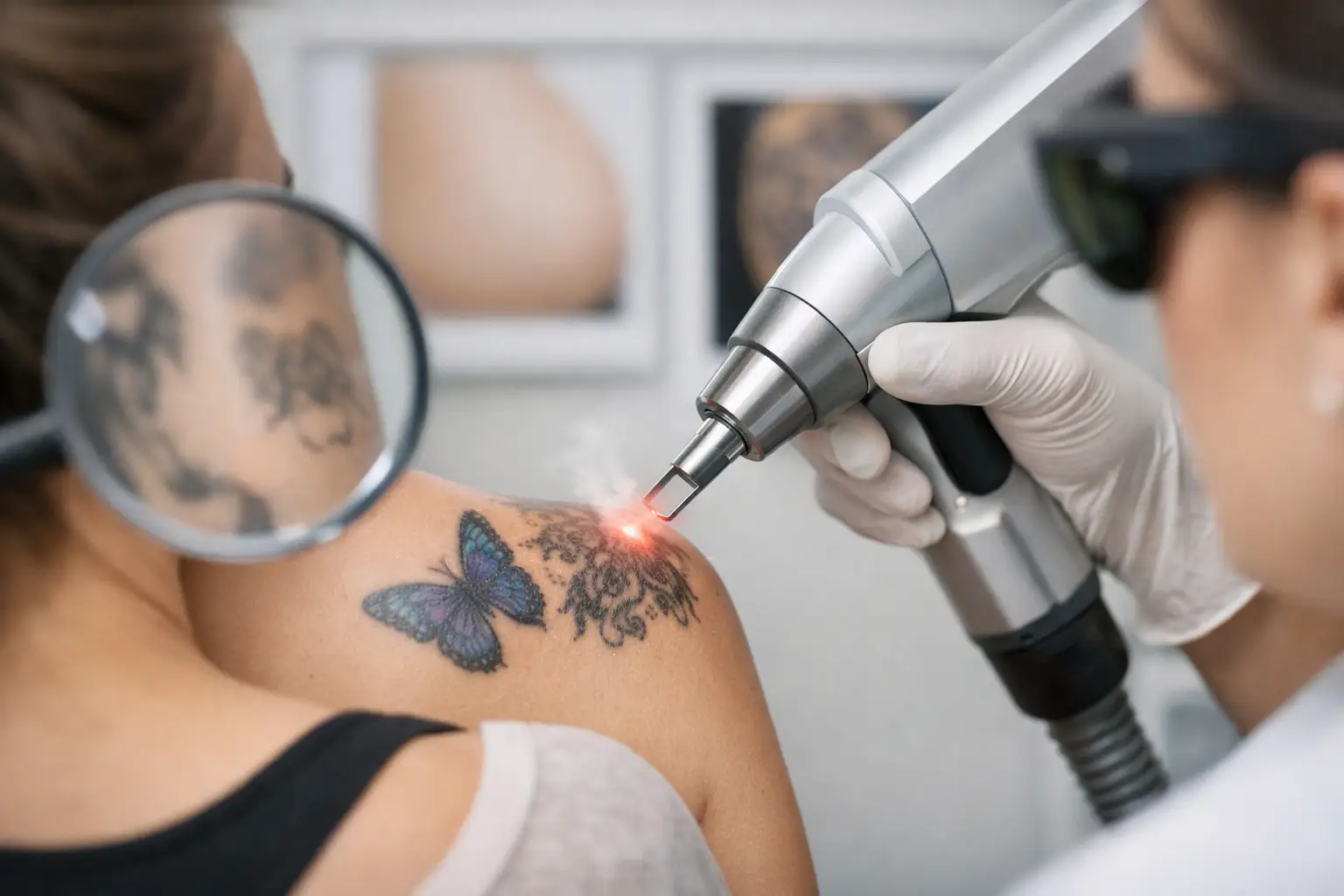
A tattoo that no longer represents you can feel far more visible than it is. For some people it is an old name, a faded design, visible permanent make-up, or a tattoo placed before a career change. Effective laser removal is not simply about making ink disappear. It is a carefully planned process that considers the pigment, placement, depth, skin tone, healing response and the result you actually want – whether that is significant fading, a clean canvas for a cover-up, or full removal where possible.
At Ink Illusions, this approach matters because skin correction is never one-size-fits-all. The same precision required in scar camouflage and restorative tattooing is essential when breaking down unwanted pigment without compromising the surrounding skin.
How laser removal works beneath the skin
Tattoo pigment sits in the dermis, beneath the skin’s surface. A medical-grade laser delivers rapid pulses of light absorbed by particular pigment colours. That energy shatters larger ink particles into smaller fragments, allowing the body’s immune system to gradually process and remove them over the weeks that follow.
The laser does not physically lift tattoo ink out of the skin in one appointment. It initiates a biological clearance process, which is why treatment spacing is as important as the laser itself. Your body needs time to respond, clear fragmented pigment and recover before another session is considered.
Different wavelengths target different colours. Black and dark blue inks generally respond most reliably because they absorb a broad range of laser energy. Reds, oranges, greens, turquoise, yellow and white can be more variable. Some colours need specialist wavelengths; others may only partially fade despite a well-managed course of treatment.
This is also why a clinic should never promise a fixed number of sessions before assessing the tattoo. Ink formulation, depth, age, density and previous treatment history can change the outcome considerably.
What laser removal can treat well
Laser treatment is widely used for professional and amateur body tattoos, cosmetic tattoo pigment and certain areas of unwanted pigment. In the right case, it can lighten a tattoo dramatically or remove it to a level where little to no visible ink remains.
Older tattoos often respond well because their pigment has already been naturally broken down over time. Amateur tattoos may also fade more quickly when ink was placed unevenly or less deeply. A professional tattoo can still respond extremely well, but tends to contain more concentrated pigment placed consistently through the skin, so the course may be longer.
Many clients do not need complete clearance. Lightening an unwanted design before a cover-up can give a tattoo artist far more creative freedom and avoid the need for an excessively dark replacement tattoo. This is often a practical, confidence-restoring goal, particularly with large or heavily saturated designs.
Laser removal can also be useful for emergency permanent make-up correction in selected circumstances. However, cosmetic tattooing requires a much more cautious assessment than body art. Brows, lips and eyeliner may contain iron oxides, titanium dioxide or mixed pigments that do not behave like conventional tattoo ink.
Cosmetic tattoo pigment needs specialist judgement
Some PMU pigments can darken when treated with a laser before they begin to clear. This is known as paradoxical darkening or oxidation. A warm brown brow may turn grey, orange or almost black, and the treatment plan must account for this possibility from the outset.
A test patch is often the sensible starting point. It gives the practitioner and client an opportunity to observe how the specific pigment reacts and how the skin heals. Anyone offering laser treatment on cosmetic tattoos should understand pigment chemistry, colour correction and alternative removal methods, rather than treating brows as though they are simply small body tattoos.
What laser removal cannot guarantee
No ethical practitioner can guarantee total removal of every tattoo. Laser technology has advanced significantly, but some pigment colours resist treatment, and some inks are designed to remain exceptionally stable in the skin. White, yellow, fluorescent and certain pale blue or green pigments can be particularly challenging.
The skin may also retain a faint shadow, known as ghosting, after most of the ink has cleared. This can be caused by residual pigment, structural change in the skin, or a contrast between the treated area and the surrounding complexion. Ghosting is not always obvious, but it should be discussed honestly before treatment begins.
Laser removal will not erase scar tissue beneath or around a tattoo. If the original tattoo was placed over a raised scar, if there was previous infection, or if the tattooing process itself caused textural damage, the ink may fade while the texture remains. In these cases, a combined skin-restoration plan may be more appropriate than laser alone.
It is also not a quick fix before a major event. Visible frosting immediately after a session is a normal short-term tissue response, not proof that the tattoo has vanished. Genuine clearance develops gradually. Rushing sessions can increase irritation and healing complications without producing faster results.
Your skin tone, tattoo and health history all matter
An expert consultation should examine more than the tattoo itself. Fitzpatrick skin type, natural pigmentation, sun exposure, history of hyperpigmentation or hypopigmentation, tendency towards keloid scarring and current skin condition all influence safe treatment settings.
Darker skin tones can be treated successfully, but they require considered wavelength selection, energy settings and treatment intervals to reduce the risk of pigment disruption. Treating every client with the same settings is not advanced practice. The goal is to target tattoo pigment while respecting the melanin in the surrounding skin.
Certain circumstances may mean postponing treatment. These include active infection, open skin, a fresh tan, recent use of photosensitising medication, pregnancy or breastfeeding depending on clinic policy, and some medical conditions that affect healing. A qualified practitioner will review your health history and advise whether laser treatment is suitable now, later, or not at all.
How many sessions will you need?
Most tattoos require multiple sessions, commonly spaced around six to eight weeks apart, though longer intervals may be recommended for some clients and skin types. A small, faded black tattoo may need fewer sessions than a dense, multicoloured professional piece, but there is no responsible shortcut to an exact number.
The rate of fading depends partly on circulation and immune function. Tattoos on areas with strong blood flow, such as the upper body, can sometimes clear more efficiently than tattoos on hands, feet or lower legs. Smoking, poor aftercare and repeatedly treating before the skin has recovered can all work against progress.
A practitioner should set expectations in stages. The first aim may be to assess response after one or two sessions. From there, the treatment plan can be refined based on fading, skin recovery and whether your end goal has changed from removal to a cover-up.
Aftercare protects your result
The treated area may feel warm and tender, similar to mild sunburn. Redness, swelling, pinpoint bleeding, blistering and temporary frosting can occur, depending on the treatment and location. These effects must be managed carefully, not picked at or covered with unsuitable products.
Keep the area clean, dry and protected according to your practitioner’s instructions. Avoid heat, swimming pools, saunas, intense exercise and direct sun exposure while the skin is healing. Do not scratch, pop blisters or remove crusting. Interfering with the healing process raises the risk of infection, scarring and unwanted pigment change.
Sun protection remains particularly important between appointments. Tanned or irritated skin may not be suitable for treatment, and ultraviolet exposure can make changes in skin pigmentation more noticeable.
Seek clinical advice promptly if you experience worsening pain, spreading redness, heat, discharge, fever or any sign of infection. These are not symptoms to wait out at home.
Choosing a laser removal practitioner
The quality of the consultation is often the clearest indicator of the quality of treatment. Look for a practitioner who discusses limitations, reviews your medical history, explains the likely behaviour of your ink, and can show an understanding of different skin tones and complex pigment reactions.
A specialist should also be prepared to say when laser is not the best first option. For some permanent make-up corrections, saline or chemical removal may be considered. For tattoos over unstable scars or compromised skin, healing and skin preparation may need to come before pigment removal. Good results are built on correct clinical judgement, not on treating every concern with the same device.
The right laser plan gives you space to move forward without making unrealistic promises about the past. Start with a thorough assessment, protect the skin throughout the process, and let each healing interval guide the next decision.