


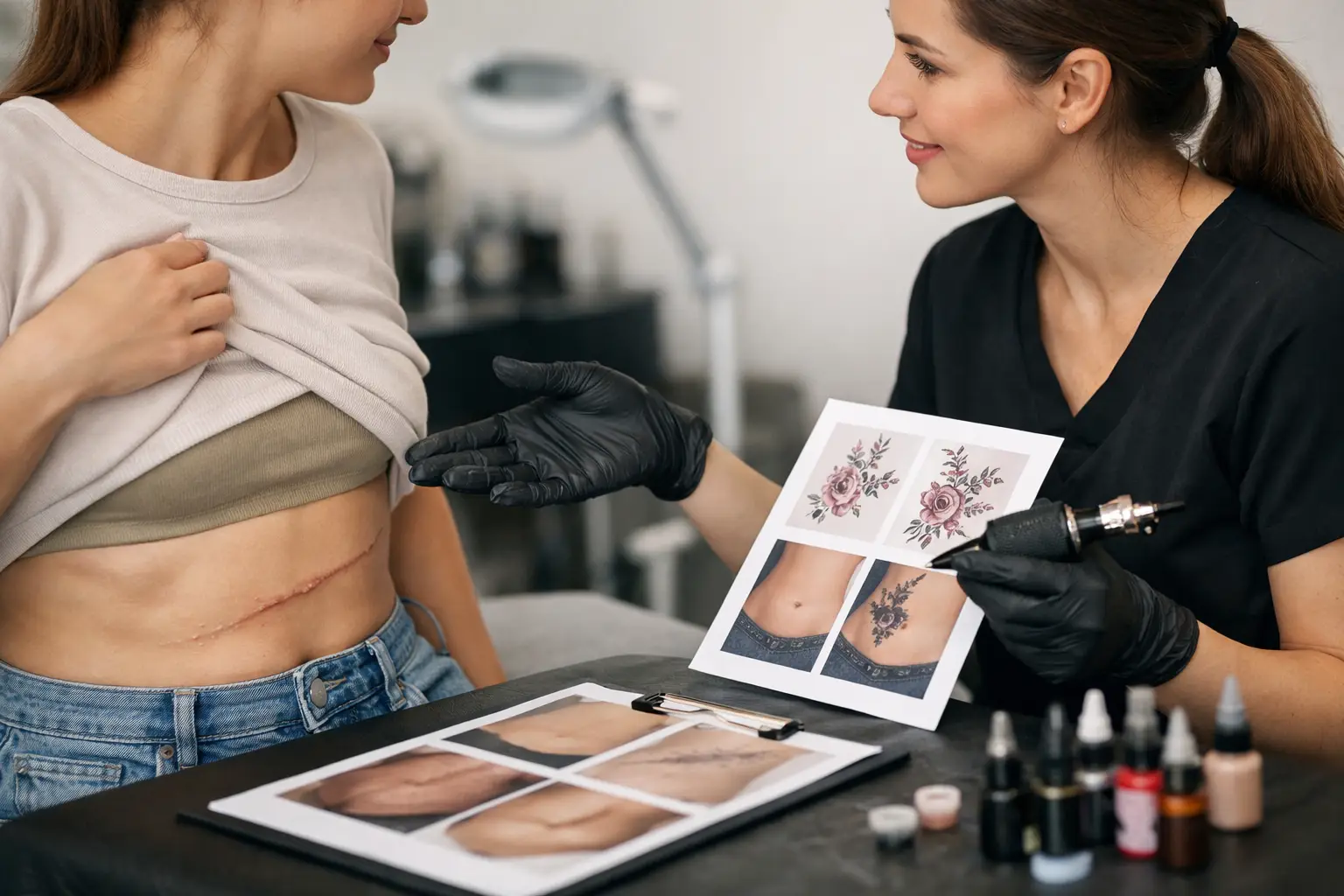
A surgical scar can be medically healed yet still draw attention every time you dress, look in the mirror or plan a holiday. This surgical scar tattooing consultation guide explains what a specialist should assess before pigment is ever placed in the skin, because successful camouflage is built on suitability, timing and realistic expectations – not simply selecting a close-looking colour.
Scar camouflage tattooing is a highly specialised form of paramedical tattooing. It uses carefully selected pigments to reduce the contrast between a scar and the surrounding skin. It does not remove the scar, flatten raised tissue or restore normal skin structure. For the right client, however, reducing that contrast can make an established surgical scar far less noticeable and restore a sense of ease in their own skin.
What a surgical scar tattooing consultation should establish
A proper consultation is not a quick colour match or a generic patch test. The practitioner needs to understand how the scar formed, how it has healed and how the surrounding skin behaves. Surgical scars can vary significantly, even where procedures appear similar. A C-section scar, tummy tuck scar, breast surgery scar, joint replacement scar or scar following skin graft surgery will each present different considerations.
The first question is usually whether the scar is mature. In most cases, scar camouflage is considered only once the area is fully healed, stable and no longer changing in colour, thickness or sensitivity. This commonly means waiting at least 12 months after surgery, though some scars take longer. A surgeon’s advice, complications during healing, ongoing treatment and the scar’s individual appearance all matter more than a fixed date.
During the consultation, a specialist will assess the scar’s colour, texture, width, position and sensitivity. They will also look at the surrounding skin in natural light, including undertones that may be warm, cool, olive, golden, red or neutral. Matching surface colour without understanding undertone is one of the fastest ways to create an obvious result once the skin heals.
The difference between colour and texture
Pigment can reduce visual contrast. It cannot make indented, raised, tethered or thickened scar tissue disappear. This distinction should be discussed clearly before treatment.
A flat, pale scar against deeper skin may be an excellent candidate for camouflage. A scar that is red, purple, actively itchy, raised or prone to thickening may need more time, medical review or a different approach first. Some clients benefit from skin preparation or scar revision treatments, such as MCA inkless needling or radiofrequency microneedling, before considering pigmentation. The sequence depends on the tissue, not on a one-size-fits-all treatment menu.
Your medical history matters
A professional consultation should include a detailed health and skin history. This is not unnecessary paperwork. It protects both the client and the quality of the eventual result.
Your practitioner needs to know about your surgery, healing history, allergies, current medication, autoimmune conditions, diabetes, blood-thinning medication, keloid or hypertrophic scarring, pregnancy or breastfeeding, and any active skin condition around the treatment area. Previous radiotherapy, chemotherapy, reconstructive surgery or recurring infection may also influence whether treatment is appropriate and when it can safely take place.
Certain circumstances may mean delaying treatment, requesting medical clearance or deciding that tattooing is not suitable. Active infection, open skin, unstable scarring, unexplained irritation and a history of severe adverse reactions are all reasons to pause. A reputable practitioner will never treat uncertainty as an inconvenience. They will prioritise safe decision-making over a fast booking.
How colour matching works on real skin
Scar tissue does not hold pigment in the same way as healthy skin. It can be denser, more fibrous, less predictable and slower to reveal its healed colour. This is why an immediate result is not the final result.
A specialist will build a bespoke pigment blend for the specific area, rather than selecting a standard beige or brown. Skin can also change seasonally with sun exposure, hormonal shifts and tanning. The goal is usually to soften the difference between scar and skin, not to promise an invisible line in every lighting condition.
Test patches may be recommended, particularly for complex skin tones, large areas or scars with unpredictable texture. A test patch provides valuable information about retention, healing response and how the pigment settles over several weeks. It requires patience, but it can prevent a poorly matched full treatment.
Why more than one session is normal
Most surgical scar camouflage plans require multiple sessions. Pigment is introduced gradually so the practitioner can assess healed retention and refine the shade without overworking delicate scar tissue. The interval between sessions gives the skin time to settle and makes colour adjustments more accurate.
Be cautious of anyone promising a finished result in one appointment without discussing the scar first. The number of sessions depends on the size of the area, scar maturity, pigment retention, skin tone, lifestyle factors and the level of contrast being corrected. Some scars respond beautifully in two sessions; others require a slower programme and a maintenance plan.
Questions worth asking at your consultation
A consultation should leave you clearer, not pressured. Ask whether your scar is fully mature, what result is realistic for its texture and colour, whether a test patch is advised, and how many sessions are likely to be needed. You should also understand the healing process, aftercare requirements, likely downtime and the total anticipated investment rather than only the cost of the first appointment.
It is sensible to ask about the practitioner’s paramedical experience, healed results on scars similar to yours and experience working across different skin tones. Before-and-after images are useful, but healed examples are more meaningful than photographs taken immediately after treatment, when temporary redness can affect the appearance of the area.
You should also be told what happens if pigment heals too light, too warm or unevenly. A skilled practitioner has a correction strategy and will explain the limits of that process honestly. Camouflage is an artistic and technical treatment, but it is performed on living skin. Predictability improves with expertise, yet it is never absolute.
Preparing for your appointment
Once you have been accepted for treatment, preparation helps support a cleaner, more predictable healing process. Follow all individual pre-treatment instructions, especially where medication or medical clearance is concerned. Do not stop prescribed medication without advice from your GP, surgeon or prescribing clinician.
In the days before treatment, avoid sunburn, tanning and irritation around the area. Arrive with clean, product-free skin unless your practitioner advises otherwise. Wear comfortable clothing that allows access without rubbing the treated site afterwards. If the scar sits beneath a waistband, bra line or tight garment, discuss practical aftercare before your appointment so you can plan around friction and pressure.
Aftercare is part of the treatment, not an optional extra. The area generally needs to be kept clean, protected from picking and shielded from sun exposure while it heals. Swimming, intense exercise, heat exposure and products that could irritate the site may need to be avoided for a short period. Your practitioner should provide clear, written instructions tailored to the body area and treatment performed.
Choosing a specialist rather than a general tattoo service
Surgical scar tattooing requires more than tattoo application skills. It calls for knowledge of scar behaviour, pigment theory, skin undertones, needle selection, depth control, infection prevention and conservative treatment planning. The most convincing results often look understated because the work has been designed around the client’s skin rather than around a predetermined pigment formula.
At Ink Illusions, this specialist approach combines advanced paramedical tattooing knowledge with techniques refined across UK, Brazilian and US skin restoration methods. That depth matters when treating scars that carry both physical history and emotional weight.
A high-quality consultation should make you feel informed, respected and in control of the decision. If your scar is not ready, waiting is a positive clinical judgement, not a setback. When the tissue is stable and the plan is right, camouflage tattooing can be a considered next step towards seeing less of the scar and more of yourself.