


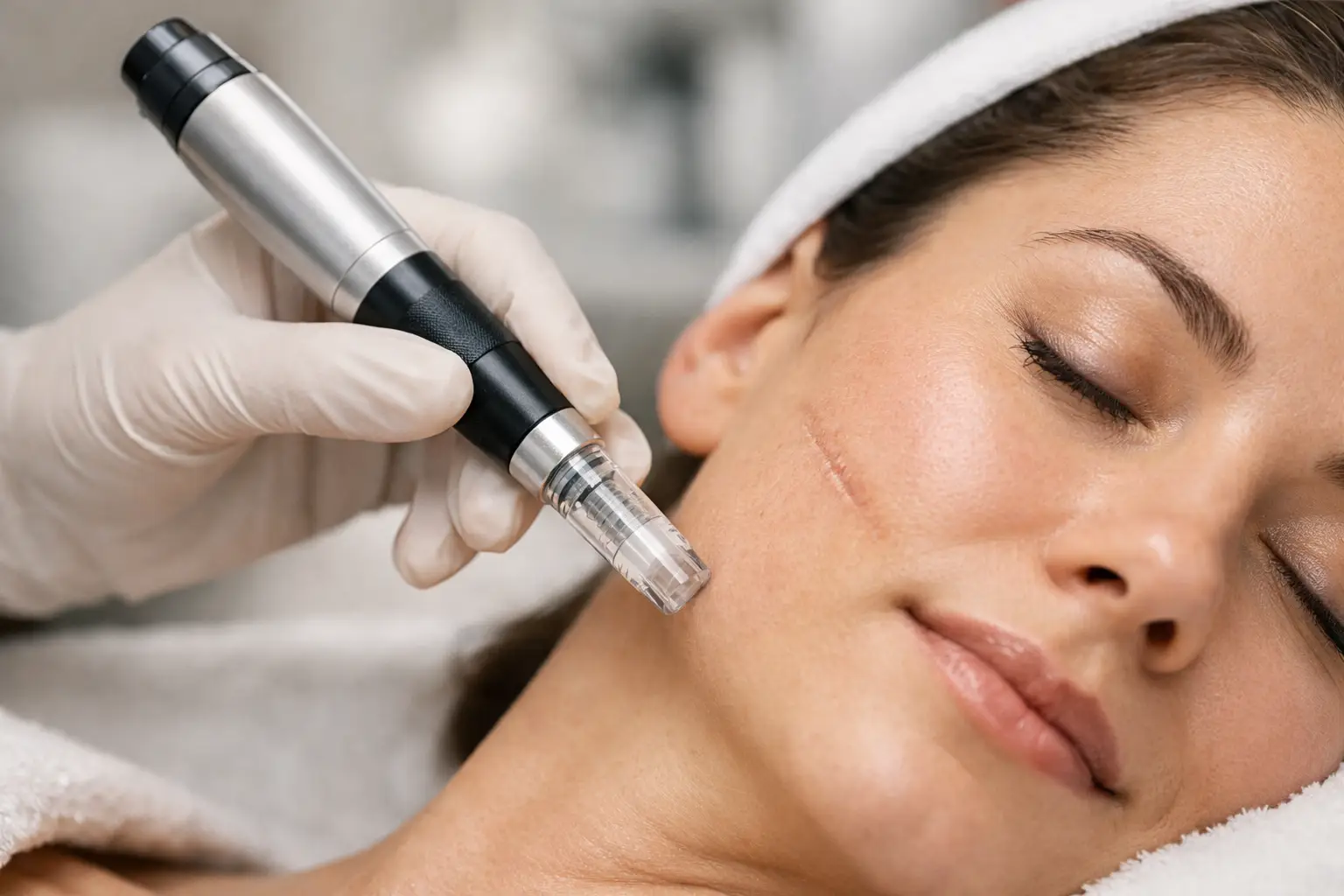
A scar can heal perfectly well and still feel like it does not belong on your skin. It may pull, shine, sit flat and pale, or remain raised and uneven long after the wound has closed. That is why inkless needling for scars has become such a sought-after treatment. It is not about covering damage with pigment. It is about stimulating change within the scar tissue itself so the area can look, feel and behave more like the surrounding skin.
For many clients, that distinction matters. If you are dealing with surgical scars, injury scars, burns, self-harm scarring or stretch marks, you are rarely looking for a trend-led beauty treatment. You are looking for visible improvement, better skin quality and a practitioner who understands the difference between ordinary microneedling and true scar revision.
What is inkless needling for scars?
Inkless needling for scars is a specialist form of medical microneedling performed without implanting skin-toned pigment. Instead, controlled needling is used to create a targeted wound-healing response within the scar. This encourages the skin to remodel over time, helping to improve texture, softness, colour integration and overall appearance.
In advanced paramedical practice, the treatment is often referred to as MCA or inkless scar revision. The principle is straightforward, but the skill sits in assessment and technique. Scar tissue does not behave like healthy skin. It can be tight, fibrotic, poorly vascularised or overactive. That means treatment depth, pattern, pressure and spacing all need to be adapted to the scar type, age and location.
This is where specialist knowledge matters. A practitioner trained in scar revision is not simply passing a device over the skin. They are working with the biology of healing, not against it.
How inkless needling works inside scar tissue
Scar tissue is structurally different from normal skin. Collagen fibres are often laid down in a disorganised way, circulation may be reduced, and the surface can appear shiny, flat, rigid or uneven. In some cases, scars become hypertrophic, creating thicker, raised tissue. In others, they become atrophic, leaving an indented area.
Inkless needling creates micro-channels in the scarred area to trigger a controlled regenerative response. This can help stimulate collagen and elastin production, encourage blood flow and support gradual remodelling of dense scar fibres. Over a course of treatment, the scar may soften, flatten, blend more evenly and become less noticeable.
What it cannot do is erase a scar completely. No ethical practitioner should promise that. Scar revision is usually about reduction, integration and improvement rather than removal. The best outcomes come from realistic planning and a treatment programme tailored to the individual.
Which scars respond best?
Not every scar is treated in exactly the same way, and not every scar is suitable at the same stage of healing. In general, inkless needling can be effective for mature scars that are fully closed and medically stable. This often includes C-section scars, tummy tuck scars, breast surgery scars, accident scars, burn scars, grafted areas and certain forms of self-harm scarring.
It can also be used on stretch marks, particularly where the skin has become pale, crepey or texturally different from the surrounding area. In these cases, the goal is often to stimulate repair and improve the skin before any camouflage work is considered.
Timing matters. Fresh scars usually need time to settle before treatment begins. A scar that is still pink, inflamed or actively changing may need to mature first. Keloid scars also require caution, as aggressive treatment is not appropriate for everyone. A thorough consultation should always come before treatment.
Inkless needling for scars versus camouflage tattooing
Clients often assume all scar treatments involve tattooing, but that is not the case. Inkless needling and camouflage tattooing serve different purposes, even though they can work well together.
Inkless needling focuses on the quality of the scar itself. It aims to improve texture, pliability and the way the tissue reflects light. Camouflage tattooing, by contrast, is a pigment implantation treatment designed to match the surrounding skin tone and reduce visible contrast.
In practice, one may come before the other. If a scar is too shiny, too tight or too texturally different, placing pigment too early can compromise the result. Often, the tissue needs revision work first. Once the scar has softened and settled, camouflage may become a more suitable next step.
This layered approach is one of the reasons specialist clinics achieve better outcomes than general beauty settings. Scar revision is rarely one-size-fits-all.
What happens during treatment?
A proper appointment starts with assessment. The practitioner will review the scar’s age, origin, colour, texture, thickness and any medical considerations that could affect healing. They should also discuss your goals honestly. Some clients want a scar to become less obvious in swimwear. Others want improved movement, less tightness or better blending with surrounding skin.
During the treatment, the scar is worked methodically with needling techniques designed for revision rather than cosmetic facial rejuvenation. Specialist serums may be used alongside the treatment depending on the protocol, but the key point is that no flesh-toned ink is implanted during this stage.
Afterwards, the area may appear red and feel sensitive for a short period. Mild flaking, dryness or temporary darkening can occur as the skin moves through its healing cycle. Good aftercare is essential. Overworking the area, picking, sun exposure and poor home care can affect results.
How many sessions are usually needed?
This depends on the scar. Some clients see a visible difference after one session, particularly in softness and surface texture, but meaningful scar revision usually takes a course of treatments. Three to six sessions is common, spaced several weeks apart to allow the tissue time to remodel properly.
Older, denser or more extensive scars often need longer-term work. So do scars with mixed issues, such as uneven texture combined with loss of colour. This is where expectations need to be handled professionally. Slow, progressive change is normal. Chasing fast results by treating too frequently is rarely the right strategy.
The scar’s location also matters. Areas under tension, such as the abdomen, shoulders or joints, may respond differently from less mobile areas. Skin tone, healing history and the original cause of the scar all influence the treatment plan.
Who should carry out inkless scar revision?
This treatment sits firmly in the specialist category. Scar tissue is unpredictable, and poorly judged needling can aggravate rather than improve the area. For that reason, it is worth choosing a practitioner with clear experience in paramedical tattooing, scar revision and skin healing across different skin tones.
The strongest practitioners tend to combine technical treatment skill with consultation depth. They know when to treat, when to wait and when another modality may be more appropriate. In some cases, combination protocols produce the best result, such as pairing scar revision planning with later camouflage, pigment correction or other advanced skin repair methods.
At Ink Illusions, that specialist framework is central to how scar work is approached. Advanced techniques, international method integration and practitioner-level training all matter because they directly affect safety, consistency and outcomes.
Is inkless needling right for everyone?
Not always. If a scar is still healing, unstable, infected or prone to problematic overgrowth, treatment may need to be delayed or adapted. Certain medical conditions, medications and healing disorders can also affect suitability. That is why consultation is not a formality. It is the foundation of safe treatment.
It is also worth saying that improvement can look different from person to person. For one client, success means the scar catches the light less and no longer draws attention. For another, it means the area feels softer and less restricted. For another, it is the first stage in a broader confidence-restoring plan.
That is the real value of inkless needling for scars. It gives scar tissue the opportunity to change instead of simply being disguised. For people living with visible reminders of surgery, trauma or skin damage, that can be a powerful shift – not just in appearance, but in how the skin feels day to day.
If you are considering treatment, look for expertise rather than convenience. Scar revision rewards precision, patience and proper planning, and the right approach can make a meaningful difference over time.